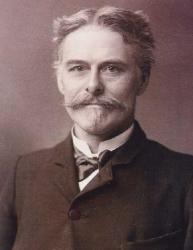
Karl Gegenbauer
 Germany
- Karl Gegenbaur: German Biologist and Pioneer of Comparative Anatomy
- Academic Career
- Major Scientific Contributions
- Other Contributions
- Death and Legacy
Karl Gegenbaur: German Biologist and Pioneer of Comparative Anatomy
Early Life and EducationKarl Gegenbaur was born on August 21, 1826, in Würzburg, Germany. In 1845, he enrolled at the University of Würzburg, where he studied under renowned scientists Rudolf Kölliker and Rudolf Virchow. He received his doctorate in medicine in 1851.
Academic Career
Gegenbaur began his academic career as a lecturer at the University of Würzburg in 1853. In 1855, he was appointed professor of anatomy at the University of Jena. From 1873 to 1901, he served as professor of anatomy and director of the Institute of Anatomy at the University of Heidelberg.
Major Scientific Contributions
Comparative Anatomy:Gegenbaur made significant contributions to the field of comparative anatomy, particularly in the study of vertebrates. In 1853, he described the formation of a two-layered embryo in the development of multicellular organisms, a phenomenon later known as gastrulation.
Embryology:Gegenbaur believed that eggs of vertebrates were single cells and argued that cells did not necessarily have to possess a membrane. He emphasized the importance of a cell's nucleus and cytoplasm.
Evolutionary Approach:Gegenbaur was an innovator in applying an evolutionary perspective to the study of individual organism development. This approach laid the foundation for the phylogenetic approach in comparative anatomy.
Other Contributions
In 1874, Gegenbaur published his seminal textbook, "Grundzüge der vergleichenden Anatomie" (Principles of Comparative Anatomy). He also founded the journal "Morphologisches Jahrbuch" (Morphological Yearbook) in 1875 and served as its editor for many years.
Death and Legacy
Karl Gegenbaur passed away in Heidelberg on June 14, 1903. He left an enduring legacy as one of the founders of modern comparative anatomy and a major figure in the field of biology.