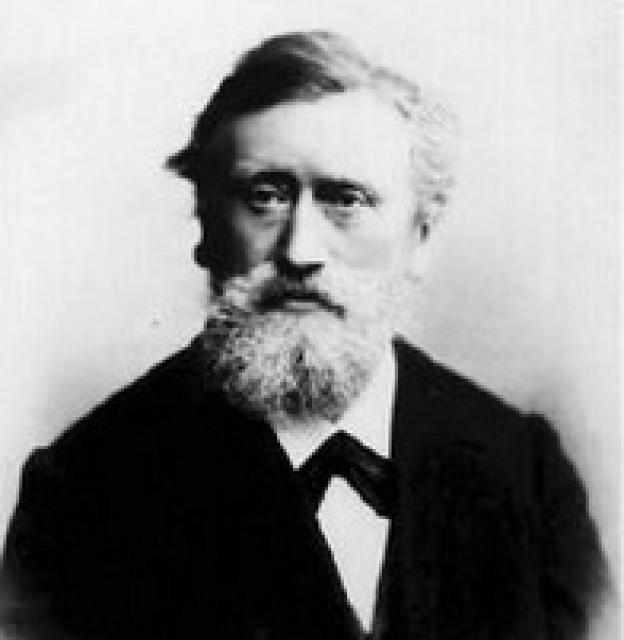
Karl Knies
 Germany
Karl Knies: An Advocate for Historical Economics
Early Life and EducationKarl Knies, a pivotal figure in the field of economics, was born in Germany in 1821. His passion for understanding the complex interactions of society led him to pursue a career in economics, where he would become a prominent representative of the historical school.
Academic Career
Knies's academic journey took him to several prestigious universities, including the University of Marburg, the University of Freiburg, and the University of Heidelberg. Throughout his tenure, he established himself as a respected professor, influencing generations of students with his innovative approach to economic theory.
Key Contributions
Knies's primary contribution to economics was his emphasis on the historical method. He argued that economic phenomena could not be fully understood without examining the historical context in which they unfolded. This perspective challenged the dominant deductive approach of his time, which relied on abstract principles to explain economic behavior.
Major Works
Among Knies's most notable works is "Political Economy from the Standpoint of the Historical Method" (1853). In this seminal text, he laid out his case for the historical approach, arguing that economic laws were not universal but rather evolved over time and varied across different societies.
Another significant work is "Money and Credit" (1873-1879), in which Knies delved into the complexities of monetary systems and their role in economic development. His insights into the nature of money and its impact on society continue to resonate with economists today.
Legacy
Knies's legacy extends beyond his immediate circle of students and contemporaries. His historical approach to economics paved the way for a more nuanced understanding of economic phenomena. Today, his theories continue to inspire scholars and policymakers, shaping the way we think about economic history and development.