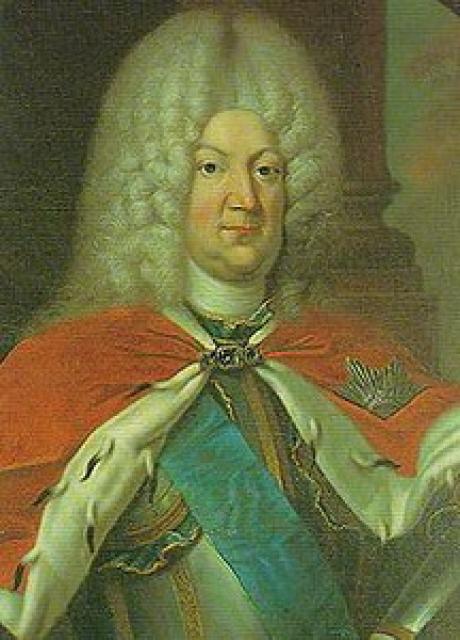
Karl Leopold Mecklenburg-Schwerin
 Germany
- Early Life and Family
- Partition of Mecklenburg and Apanage
- Military Exploits and Eccentricities
- Accession to the Duchy of Mecklenburg-Schwerin
- Marriages and Unhappiness
- Russian Intervention and Fall from Power
- Petrine Disfavor and Imprisonment
- Catherine's Departure and After
Early Life and Family
Nephew of Duke Christian Ludwig I of MecklenburgKarl Leopold was born to Frederick, Duke of Mecklenburg (1638-1688), and Christine Wilhelmine of Hesse-Homburg (1653-1722). His elder brother, Frederick William I of Mecklenburg (1675-1713), inherited the duchy from their uncle, Christian Ludwig I of Mecklenburg (1623-1692), in 1692.
Partition of Mecklenburg and Apanage
Establishment of Mecklenburg-Strelitz and Mecklenburg-SchwerinFrederick William I managed to end the disputes within the House of Mecklenburg with the Hamburg Treaty of 1701. This treaty divided the duchy into two principalities: Mecklenburg-Strelitz and Mecklenburg-Schwerin. Karl Leopold received an apanage of 15,000 Reichsthalers and the revenues of Dobberan.
Military Exploits and Eccentricities
Imitating King Charles XII of SwedenKarl Leopold served in the military campaigns of Swedish King Charles XII. He admired the Swedish monarch and imitated his clothing, gestures, and speech. This behavior earned him the nickname "the Monkey of Charles XII" from Prince Eugene of Savoy.
Accession to the Duchy of Mecklenburg-Schwerin
Inheritance from Brother Frederick WilliamIn 1713, Karl Leopold inherited the Duchy of Mecklenburg-Schwerin upon the death of his brother, Frederick William.
Marriages and Unhappiness
Three Marriages, One HappyKarl Leopold married three times. His first wife, Sophia Hedwig of Nassau-Dietz (1690-1734), rejected him. He then entered a morganatic marriage with Christina Dorothea von Lepel, which proved unhappy. In 1716, he married Catherine Ivanovna (1691-1733), the niece of Tsar Peter I of Russia. This marriage was politically motivated and did not bring happiness to either party. Karl Leopold treated Catherine with cruelty.
Russian Intervention and Fall from Power
Clash with the Knights and Russian AssistanceKarl Leopold's conflict with the knights of the Holy Roman Empire escalated, leading him to seek Russian assistance. Tsar Peter I sent 40,000 troops to Mecklenburg in 1716-17, marking the first Russian military presence on German soil.
Petrine Disfavor and Imprisonment
In 1716, Karl Leopold incurred the wrath of Tsar Peter I. He was stripped of his throne and imprisoned in Dömitz Fortress, where he remained until his death in 1747.
Catherine's Departure and After
Leaving Mecklenburg and Return to RussiaIn 1722, Catherine Ivanovna left her husband and returned to Russia with their daughter, Anna Leopoldovna. Karl Leopold's reign was marked by eccentricity, marital unhappiness, and Russian intervention that ultimately led to his downfall.



