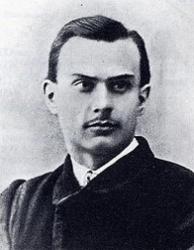
Karl Ludwig Willdenow
 Germany
- Carl Ludwig Willdenow: A Pioneering German Botanist
- Early Life and Education
- Academic Career and Research
- Legacy and Recognition
Carl Ludwig Willdenow: A Pioneering German Botanist
Carl Ludwig Willdenow, a renowned German botanist, played a pivotal role in shaping the field of systematic botany. His groundbreaking contributions laid the foundation for floristic, ecological, and historical approaches to plant geography.
Early Life and Education
Willdenow was born in Berlin, Germany, and pursued his education at the University of Halle, where he studied both botany and medicine. After receiving his medical degree in 1789, he worked as an apothecary in Berlin.
Academic Career and Research
In 1799, Willdenow was appointed as professor of natural history at the Collegium Medico-Chirurgicum in Berlin. Two years later, he became the director of the Berlin Botanical Garden, where he conducted extensive studies on South American plants brought back by Alexander von Humboldt's expedition.
Willdenow's research focused on plant systematics and plant geography. He critically assessed the concept of continental stability, challenging the idea that continents and oceans had remained stationary over geologic time. He also distinguished between solitary and "social" plants, foreshadowing Humboldt's later work on plant physiognomy.
Legacy and Recognition
Willdenow's contributions to botany were widely recognized and honored. In 1805, Carl Peter Thunberg named the plant genus Willdenowia after him in recognition of his botanical achievements. In 1953, the journal "Willdenowia" was established in Berlin to showcase botanical systematic research.
Willdenow also served as a professor at the University of Berlin after its reorganization in 1810. His herbarium, containing over 20,000 specimens, remains an invaluable resource for botanists to this day.
Carl Ludwig Willdenow's pioneering work laid the groundwork for modern botany and continues to influence botanical research today. His legacy as a systematic botanist and plant geographer ensures his place among the most influential scientists of his time.