Karl Negeli
 Germany
- One of the Most Influential Botanists of the 19th Century
- Early Life and Education
- Research and Discoveries
- Marine Algae
- Plant Anatomy and Physiology
- Later Career and Influence
- Cell Theory and Heredity
- Criticism of Darwin's Theory
- Legacy
One of the Most Influential Botanists of the 19th Century
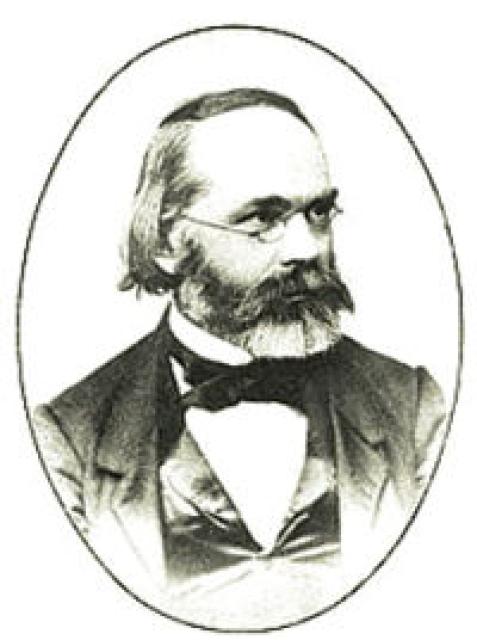
Karl Wilhelm von Nägeli (1817-1891) was a pioneering botanist who made significant contributions to the field of botany during the 19th century.
Early Life and Education
Born in Switzerland, Nägeli initially pursued medicine at the University of Zurich. However, his passion for natural sciences, particularly botany, led him to dedicate his studies to that subject.
Research and Discoveries
In 1839, Nägeli worked under the renowned botanist Augustin Pyramus de Candolle in Geneva, where he conducted his first scientific research on the Swiss genus Cirsium for his doctoral dissertation.
Marine Algae
Nägeli's interest in marine algae led him to study these organisms in Italy and England. His subsequent publications, "Die neuern Algensysteme" and "Gattungen einzelliger Algen," laid the foundation for algal taxonomy.
Plant Anatomy and Physiology
As an anatomy and physiology professor at the University of Freiburg, Nägeli delved into the structure and function of plants. His extensive 1858 monograph, "Die Stärkekörner," provided a comprehensive analysis of starch grains.
Later Career and Influence
In 1857, Nägeli became the director of the Botanical Institute in Munich. While he mentored a select group of students, many of them rose to prominence in the scientific community.
Cell Theory and Heredity
Nägeli's work on cell theory and heredity was particularly influential. He developed the theory of intussusception, which explained the growth of cell walls. Additionally, his concept of idioplasm laid the groundwork for the understanding of genetic inheritance.
Criticism of Darwin's Theory
Nägeli's 1884 book, "Mechanisch-physiologische Theorie der Abstammungslehre," provided a critique of Darwin's theory of natural selection. He proposed alternative theories for the formation of varieties and inheritance.
Legacy
Despite some errors in his observations, Nägeli's legacy remains significant. His rigorous scientific approach, logical deductions, and philosophical insights have left an enduring impact on botany. His comprehensive work in algal taxonomy, plant anatomy, cell theory, and heredity continues to inspire scientists to this day.