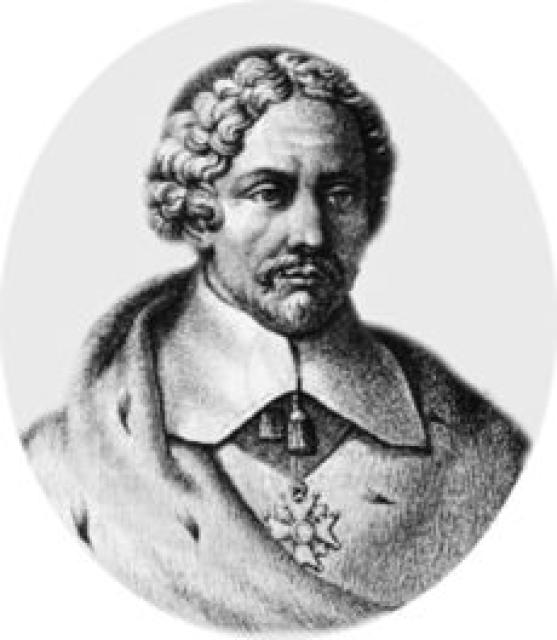
Joseph de Tournefort
 France
- Joseph Pitton de Tournefort: French Botanist and Explorer
- University and Professorship
- Scientific Expeditions and Travelogue
- Botanical Classification
- Taxonomic Innovations
- Legacy and Commemoration
Joseph Pitton de Tournefort: French Botanist and Explorer
Early Life and EducationJoseph Pitton de Tournefort was born in Aix-en-Provence, France, in 1656. Initially destined for a career in the Church, his father's death allowed him to pursue his passions for medicine and botany. After studying at a Jesuit school, he embarked on two years of plant-collecting expeditions in southern France.
University and Professorship
In 1678, Tournefort enrolled at the University of Montpellier, where he studied under Pierre Magnol. In 1683, he secured a professorship in botany at the Royal Garden of Medicinal Plants in Paris under the patronage of court physician Guy-Crescent Fagon.
Scientific Expeditions and Travelogue
By royal decree, Tournefort undertook numerous scientific expeditions throughout Europe, including the Pyrenees, where he amassed vast natural history collections. In 1700-1702, he embarked on a groundbreaking journey to Greece, Turkey, the Black Sea coast, Armenia, and Georgia, documenting plants, natural history, and ethnographic observations. His travelogue, "Relation d'un voyage du Levant," was published posthumously.
Botanical Classification
Tournefort's seminal work, "Elémens de botanique," proposed an original plant classification system based on floral corolla structure. However, his most significant contribution was the systematic arrangement of plants into larger groups (classes), followed by sections, genera, and species. Each group received a morphological description, introducing the concept of hierarchical ranks.
Taxonomic Innovations
Together with Pierre Magnol and August Quirinus Rivinus, Tournefort pioneered the distinct categorization of genus and species. He also established the practice of naming species with a genus name and a specific epithet, adhering to the principle of "one genus, one name." These innovations paved the way for the taxonomic reforms later undertaken by Carl Linnaeus.
Legacy and Commemoration
Tournefort's botanical system dominated botany in the early 18th century. His travelogue remains a valuable source of knowledge about the culture and customs of Greece and Asia Minor. In recognition of his contributions, Carl Linnaeus named a genus of the borage family "Tournefortia," and Henry Hurd Rusby named "Tournefortiopsis" in the Rubiaceae family.


