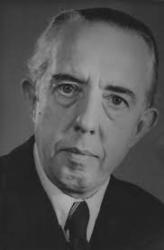
Karl Taugiz
 Poland
Biography of Karl Tausig
Karl Tausig was an exceptional Polish pianist, composer, and educator. He was one of the most prominent figures in the piano art of the 19th century. The press often compared him to Liszt and Rubinstein, both of whom admired his talent. Liszt was fascinated by Tausig's "bronze hands," while Rubinstein referred to him as "flawless." Born on November 4, 1841, in Warsaw, Tausig spent his childhood there. He was taught piano by his father, a professional pianist and composer who was a student of Sigismund Thalberg. In July 1855, the young musician was introduced to Liszt. The renowned maestro initially did not want to listen to another prodigy from Poland, but Tausig's father, Alois Tausig, eventually convinced him, and Liszt was not disappointed. Composer Peter Cornelius, who was part of his circle of friends, witnessed Liszt's excitement while listening to the young boy. "The youth turned out to be a real little devil. He played Chopin's Polonaise in A-flat major with such octaves that we held our breath," he said. Liszt himself wrote an excited letter to Princess Sayn-Wittgenstein, describing the young prodigy from Warsaw who visited him in Weimar and would stay there for another year or two to further develop his skills. "He plays everything excellently, composes (fairly well), and, in my opinion, will have a dazzling career very soon..." The great maestro's prediction came true very quickly. Tausig made progress, mastered a vast repertoire, and became a favorite in high society salons. In 1858, the musician made his debut in Berlin, performing with an orchestra under the direction of X. Bülow. Over the next two to three years, he traveled throughout Germany and then Europe. Even at that time, critics noted his exceptional technical abilities. Many admired his overflowing emotion and "Lisztian eccentricity." Although there were critical reviews, such as those of E. Hanslick, who expressed dissatisfaction with various exaggerations and the habit of "hitting the keyboard so forcefully that the sound resembles cracking or squeaking." Soon, Tausig's stormy and aggressive style gave way to proportionality, balance, and harmony. Even Hanslick himself wrote about the artist's "significantly more complete style" a few years later, and supporters of emotionally charged playing sometimes accused him of objectivity, excessive restraint, coldness, and rationality in his interpretations, especially of classical composers' works. "Despite this, critics consistently noted Tausig's truly phenomenal performance achievements, combining Liszt's power and color with Bülow's intellectual depth, and A. G. Rubinstein's boundless energy with T. Tausig's melodious and transparent playing," wrote A. Merkulov. It is not surprising that piano historians believe Tausig possessed all the virtuosity in the world and was probably the most versatile and accomplished pianist of his time. In terms of playing style and artistic appearance, Tausig was undoubtedly a typical virtuoso of that era, captivating the audience with technical "pirouettes." However, he consciously rejected any theatricality, everything he summed up in one word - "spectacle." He was almost immobile at the piano, and only in the most challenging moments did his lips slightly tense on his impassive face. But it would be wrong to think that Tausig was just a virtuoso; he was also a great, genuine artist. The famous Russian critic V. Lenz noted, "He played like Chopin, he felt like Chopin, he was Chopin at the piano." This says a lot, although the absence of identity is evident. Tausig was more virtuosic than Chopin, colder than Chopin, and performed music by various composers, unlike Chopin. His repertoire was unusually extensive for that time. His own compositions, such as the Concerto for Piano and Orchestra and several etudes, occupied an insignificant place in his repertoire. Instead, he performed works rarely heard at the time, such as Bach's preludes and fugues. It is noteworthy that even Liszt was perplexed by Tausig's inclusion of Scarlatti's sonatas in his concert programs, as they were rarely played from the stage at that time. The basis of the artist's programs consisted of Liszt's works, whom Tausig called his "god," "king of pianists," and his "second father," as well as Chopin and Beethoven. According to contemporaries' recollections, Tausig had no equal in performing Liszt's fantasy "Don Juan," which even Bülow and Anton Rubinstein struggled with, according to C. A. Cui's observation. Tausig was the first to perform the most difficult etudes by Liszt and Chopin, including Chopin's third etude in E major. He played Beethoven strictly, stylishly, "without any modern pianistic affectations that so often distort the meaning of the performed work" (Cui). "Let us stick to the great style," Tausig told Lenz. "Beethoven was not capable of any mannerism." Tausig skillfully captured Beethoven's style in his piano arrangements of parts from his quartets. Another of his specialties were magnificent piano transcriptions of Schubert's compositions, paraphrases on Wagner's opera motifs, arrangements of Strauss waltzes, which can still occasionally be found in pianists' programs. In the mid-1860s, after settling in Berlin, Tausig engaged in teaching alongside his concert activities. In 1866, he established the Academy of Advanced Piano Mastery. However, he had very little time for it. His main pedagogical method was demonstrating music in his own performance and demanding the student to copy him as accurately as possible. One of his students, the well-known pianist Amy Fay, somewhat bitterly noted, "I always felt that it was like trying to strike lightning with a wet match." Nevertheless, among Tausig's students was the renowned Russian pianist Vera Timanova. It should be noted that Tausig enjoyed a high reputation among his contemporaries not only as a virtuoso but also as a true artist, a person with broad knowledge and culture. He was well-read in philosophy and natural sciences and was considered an excellent conversationalist when he was "in the mood." Many of the greatest musicians were his friends and admirers, including Wagner, whose popularity he contributed to with his transcriptions of opera fragments. Liszt considered Tausig, his favorite student, the "successor of his pianism" and dedicated his famous "Mephisto Waltz" to him. Liszt himself said, "Tausig's hands are bronze and diamonds." Brahms noted Tausig's "absolutely exceptional talent" that made an "extraordinary impression." He was the "greatest pianist in public today. Completeness and charm of touch, the variety of programs, the absence of any charlatanism, in short - almost incredible perfection for a 24-year-old!" Tausig also had a considerable number of admirers in Russia... In March 1870, the artist toured Russia, giving three concerts in St. Petersburg and Moscow. There are many substantial reviews by famous Russian musicians about the art of the remarkable Polish pianist. As the years went by, the maestro increasingly sought solitude and suffered from bouts of severe melancholy. In 1870, he confessed to his students that the very thought of performing publicly was unbearable for him. Soon after, as if overcoming himself, he announced a series of four concerts but canceled them under the pretext of deteriorating health. He then had the desire to go to Italy and escape the winter and illness there, but as soon as he set foot on the promised land, he decided, "No, no, I cannot stay here!" And he returned to Berlin, where he succumbed to the "plague of the 19th century" - tuberculosis... It was only after his departure that the true scale of this unique musician became apparent. Hans von Bülow, himself one of the luminaries of world piano playing, exclaimed, "Unparalleled, magnificent concentration of fantasy! He embodied the entire development of piano playing from its inception to the present day." At the same time, Anton Rubinstein wrote to his friend Liszt, "I have received the sad news of Tausig's death. It's terrible. I am deeply saddened by this death, especially since he was the last of the great virtuoso pianists, and instrumental music can only decline with the disappearance of virtuosity; art does not advance with "good musicians" alone. The so-called "good musician" is a deputy of the right, center, or left, but art needs a dictator, an emperor. Composition is law, and a virtuoso is executive power..." Tausig died before the age of 30 and far from reaching his peak; he remained a mystery, a legend...