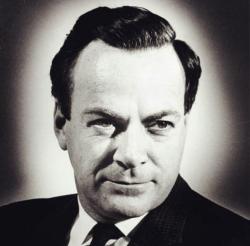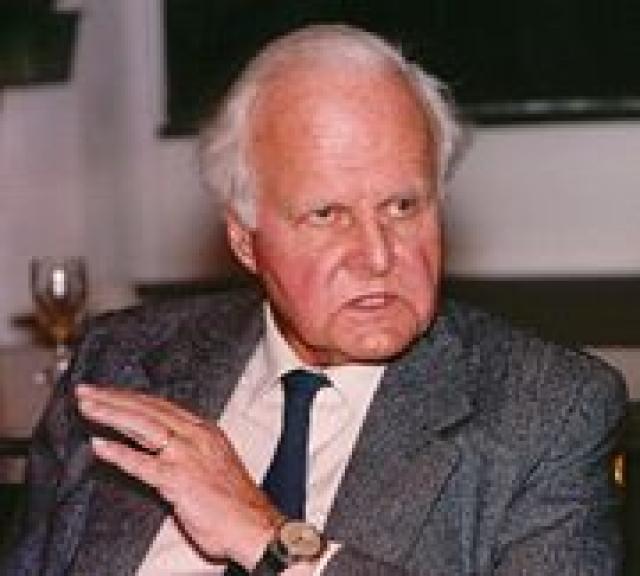
Karl Vaytzekker
 Germany
- Early Life and Education
- Involvement in Nuclear Research
- Post-War Career and Activism
- Philosophical Contributions
- The Unity of Nature
- Time and Possibility
- The Growth of Complexity
- Modern Crisis and the Future
- Publications
Early Life and Education
Carl Friedrich von Weizsäcker, a German physicist, philosopher, and politician, was born in Kiel on June 28, 1912. Coming from a renowned Swabian family of theologians, scientists, and military figures, Weizsäcker displayed a keen interest in astronomy and physics from an early age.
From 1929 to 1933, he pursued his studies in physics at the prestigious universities of Berlin, Göttingen, Copenhagen (under Niels Bohr), and Leipzig (under Werner Heisenberg).
Involvement in Nuclear Research
During the Second World War, Weizsäcker joined a group of German scientists, including Heisenberg, in the "Uranium Project" aimed at developing nuclear weapons.
Post-War Career and Activism
After the war, Weizsäcker assumed a leading role at the Max Planck Institute for Physics in Göttingen (1946-1957). In 1956, he co-authored the "Göttingen Manifesto," a declaration by German nuclear scientists renouncing the production, testing, or use of nuclear weapons.
Philosophical Contributions
From 1957 to 1969, Weizsäcker held a professorship in philosophy at the University of Hamburg. His philosophical views emphasized the importance of uncovering the foundations of science and examining the social implications of scientific discoveries.
The Unity of Nature
Weizsäcker believed that philosophy should provide a comprehensive framework for understanding the unity of nature, drawing inspiration from quantum physics. He argued that quantum physics' axioms could provide the basis for understanding the universe as a whole.
Time and Possibility
Weizsäcker also explored the philosophical implications of time and the distinction between the past and the future. He saw the passage of time as a condition for experience, with the past interpreted as factual and the future as a realm of possibility.
The Growth of Complexity
Based on the second law of thermodynamics, Weizsäcker proposed that the world is not characterized by an increase in entropy but rather by a growth in the "wealth of forms" or potential information.
Modern Crisis and the Future
Weizsäcker saw the modern crisis stemming from the hyperabstraction and quantification of human interactions in large societies. He advocated for a shift away from Aristotelian logic to a "quantum" logic that acknowledges the uncertainties and possibilities that characterize the future.
Publications
Throughout his career, Weizsäcker authored numerous works, including:"Zum Weltbild der Physik" (1943)
"Die Geschichte der Natur" (1948)
"Die Verantwortung der Wissenschaft im Atomenzeitalter" (1957)
"Die Einheit der Natur" (1971)
"Wege in der Gefahr" (1977)
"Physik und Philosophie" (1993)
Legacy
Carl Friedrich von Weizsäcker passed away on April 28, 2007. His contributions to physics, philosophy, and social activism continue to shape scientific and philosophical thought.