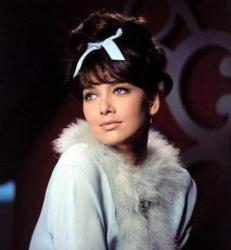
Katharine Hepburn
 USA
USABiography of Katharine Hepburn
Katharine Houghton Hepburn, an American actress, was born on May 12, 1907, in Hartford, Connecticut. She came from an unconventional family for her time and environment. Her father, Thomas Norval, was a well-known urologist in the city, and her mother, Catherine Martha Houghton, known as "Kit," was a leader in the suffragist and feminist movements. Despite becoming an orphan at a young age, Catherine managed to receive a higher education against her guardian's wishes, picketed the White House for women's labor rights and birth control.
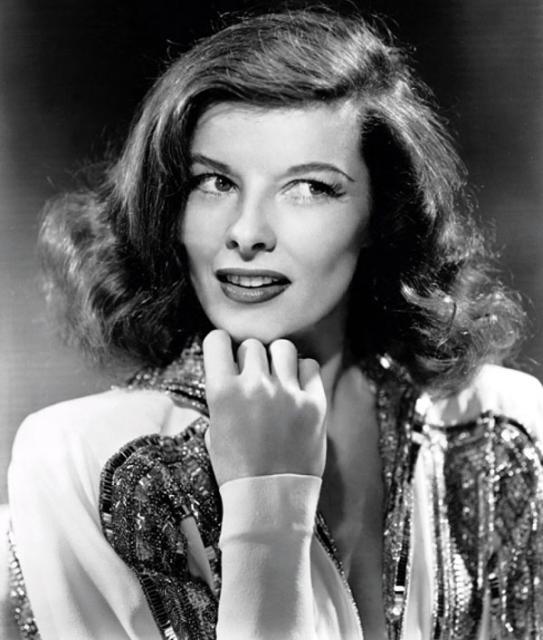
In the Hepburn household, famous people of the time, such as writer Sinclair Lewis and suffragist leader Margaret Sanger, were frequent guests. Discussions on topics that were not typically spoken about took place freely in their living room. Katharine, the famous actress, had five siblings and grew up in an atmosphere of freedom of thought and personal responsibility. She was taught to swim in icy water and to fear no work. She was named Katharine Houghton after her mother and was the second child after her beloved brother Tom, whose birthday (November 8) she considered her own after his death.

The future actress attended Bryn Mawr College in Philadelphia, where her mother had also studied. Although she studied history, her heart belonged to the student theater, where she spent all her free time. In 1928, after receiving her bachelor's degree, Katharine Hepburn started working in the Baltimore theater and moved to New York a year later to perform on Broadway, where she met broker Ludlow Ogden Smith. She married him but adamantly refused to change her last name or quit acting.
With her striking appearance, grace, energy, and unique subtle humor, the young actress won the hearts of audiences and directors, despite her independent nature and occasional scandals. After a performance, Katharine received an invitation from the manager of RKO Radio Pictures to play the lead role in the film "A Bill of Divorcement" (1932). The film was a huge success and marked the beginning of Katharine Hepburn's brilliant career. She signed a long-term contract with RKO, moved to Hollywood, divorced Ludlow Ogden Smith, and began working with stars of the time such as Douglas Fairbanks, Adolphe Menjou, and George Cukor.
By 1933, Hepburn had won the Venice Film Festival Award for her role as Josephine in "Little Women," and in 1934, she won her first Oscar for Best Actress in "Morning Glory." Throughout her career, Katharine Hepburn received a total of twelve Oscar nominations, five BAFTA nominations, and eight Golden Globe nominations, most of which she won later in life.
Katharine's stardom did not affect her independent character. Contrary to Hollywood traditions, she insisted on looking the way she wanted off-camera. She avoided journalists, was rude to autograph seekers, neglected decorative cosmetics, and dressed comfortably while still looking stunning. Once, at the director's request, her "unfeminine" trousers were removed from the dressing room before shooting. Katharine walked onto the set in her underwear and declared that she would continue to dress that way until her clothes were returned.
During her six years at RKO, she appeared in fourteen films, creating memorable characters even in the most ordinary scripts. However, in 1938, Katharine Hepburn received a series of critical reviews for her portrayal of Susan Vance in "Bringing Up Baby." Offended, she terminated her contract, announced her retirement from filmmaking, and returned to the theater, partly influenced by her unsuccessful audition for the role of Scarlett O'Hara in "Gone with the Wind."
Her return to Broadway caused a sensation, and playwright Philip Barry wrote the play "The Philadelphia Story" specifically for her. The performances were sold out, and instead of a salary, Katharine acquired the film rights to the play. In 1940, she triumphantly returned to Hollywood, earning an Oscar nomination for Best Actress for her role as the capricious socialite Tracy Lord in "The Philadelphia Story." Her next success came with "Woman of the Year" (1942), which garnered her another Oscar nomination and introduced her to the love of her life, Spencer Tracy.
Spencer Tracy, her co-star in the film, was married but lived separately from his wife. They were together for 27 years, starred in nine films together, and when Tracy became seriously ill, Hepburn took a five-year hiatus from her film career to care for him until his death. Among her most famous roles during this period were Rose in "The African Queen" (1951), Jane Hudson in "Summertime" (1955), and Lizzie in "The Rainmaker" (1956).
Katharine's triumph came with the film "Guess Who's Coming to Dinner" (1967), which finished shooting just days before Spencer Tracy's death. She received an Oscar and BAFTA for her role as Christina Drayton. The following year, she won the same awards for her performance as Eleanor of Aquitaine in the historical film "The Lion in Winter." Katharine was known for her robust health and long creative life. In 1982, she won another Oscar for her role as Ethel in "On Golden Pond," and in 1993, she was nominated for a Golden Globe for her lead role in the comedy film "Love Affair."
Katharine Hepburn passed away on June 23, 2003, in the childhood home where she grew up. On the day of her funeral, Broadway canceled performances and dimmed the lights, and President Bush made a statement calling her an "artistic treasure of the nation." The City Garden in Manhattan, a square in New York, and a theater in Old Saybrook are named after Katharine Hepburn.