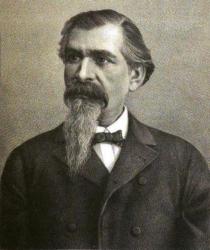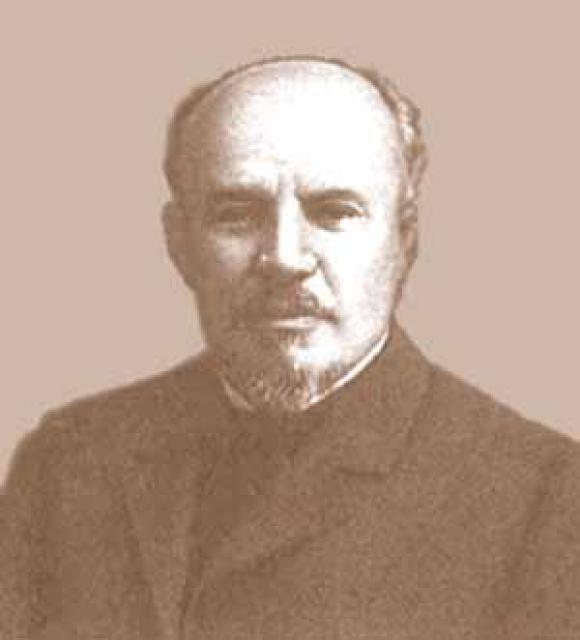
Kazimir Barancevich
 Russia
- Early Life and Education
- Literary Beginnings
- Hardship and Struggle
- Literary Debut
- Prolific Output
- Themes and Style
- Critical Reception
- Legacy
Early Life and Education
Kazimir Stanislavovich Barantsevich was born in 1851 in St. Petersburg, Russia. His mother was French and his father, a Polish nobleman, had fully embraced Russian culture. Barantsevich attended the Second Gymnasium, where he forged a lifelong friendship with fellow student Albov.
Literary Beginnings
Barantsevich's passion for literature led him to abandon his gymnasium studies in the fourth grade. During this time, his social consciousness emerged, initially manifested in a form of populism and later evolving into a deep sympathy for the oppressed.
Hardship and Struggle
In 1870, the death of his father left Barantsevich responsible for his ailing mother. Forced to work tirelessly for meager wages, he endured immense hardship. He eventually found employment with the St. Petersburg Horse-Drawn Railway Administration.
Literary Debut
Barantsevich made his literary debut in 1874 with the short story "One of Our Old Acquaintances," which received little attention. However, his 1878 story "Broken Strings" established him as a professional writer.
Prolific Output
Barantsevich published extensively in various magazines, including "Delo," "Vestnik Evropy," and "Otechestvennye Zapiski." His works were collected in numerous anthologies, including "Under Oppression" (1885) and "Broken Strings" (1886). He also wrote novels such as "The Slave" (1888) and "Quiet Happiness" (1897).
Themes and Style
Barantsevich's writing is known for its melancholy and focus on neglected aspects of urban society. His characters are often ordinary individuals struggling with life's challenges. His narrative style resembles that of earlier пейзажисты (landscape painters), with a strong sense of romanticism.
Critical Reception
Critics have noted Barantsevich's ability to evoke mood and emotion, particularly in depicting the suffering of others. However, they also observe a lack of well-defined characters, which sometimes weakens his works.
Legacy
Barantsevich's works continue to be recognized for their poignant portrayal of ordinary lives. His complete works in 14 volumes were published between 1911 and 1914. His autobiography is included in S. A. Vengerov's "Critical-Biographical Dictionary of Russian Writers and Scholars" and F. F. Fidler's "First Literary Steps."