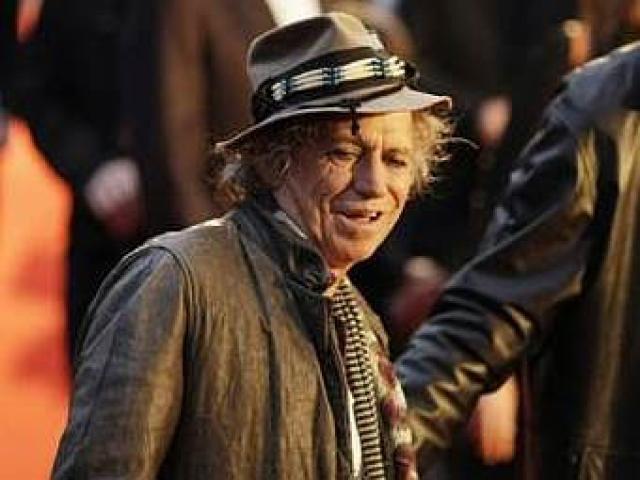
Keith Richards
 Great Britain
Keith Richards Biography
Keith Richards, the guitarist of the band The Rolling Stones, embodied the scandalous image of the group like no one else. Chaos, dark stories, drug excesses, and legal battles were all part of his life. He was a bad boy of rock and roll, a tempting figure for both fans of the band and sensation-seeking reporters.

Early Life
Keith Richards did not have a privileged upbringing. He grew up as an only child in a working-class neighborhood. His father, Bert, believed in strict discipline, while his mother, Doris, provided him with the love and understanding every child needs. Richards was a shy, soft-spoken, and self-conscious "momma's boy." His maternal side of the family was filled with colorful characters, with his grandfather, Gus Dupree, being the most vibrant. Gus was a lively, money-squandering musician who greatly influenced young Keith. It was under Gus's influence that Richards realized his future calling as a cowboy in the Wild West or as a musician.

Teenage Years
In school, Richards encountered the harsh realities of life. He was often involved in fights and had to fight for his place in the sun. He waged a war on two fronts: with his classmates and with his teachers. Academically, Richards was never an exceptional student and gradually lost interest in it. Instead, he poured all his energy into playing the guitar, distancing himself from both enemies and friends. During his early youth, the main traits of Keith Richards' character began to take shape. His goals were crystal clear, and his determination and perseverance were limitless. If Richards hadn't found success and popularity with The Stones, he would have continued to pursue his dreams, even if it meant playing in small clubs and living in obscurity. His personal assessment of his possible future was, "I probably would have become a bandit, but a bandit with style."
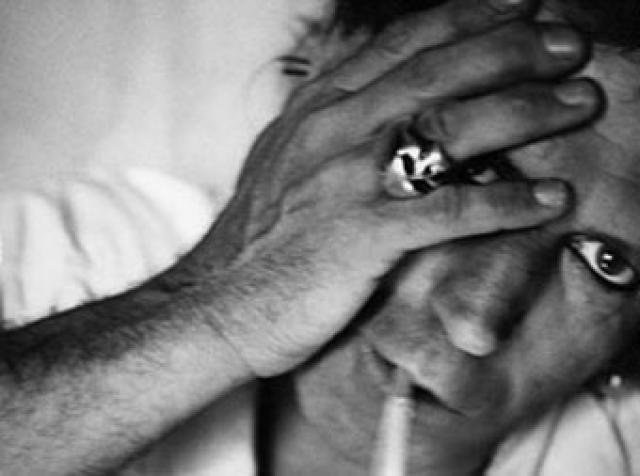
The Rolling Stones
Today, Keith Richards' importance in the formation of The Rolling Stones is somewhat exaggerated, but in the 1960s, it was greatly underestimated. Mick Jagger, initially, was like a person from another planet to Richards, someone from the upper class. Brian Jones was an idol-like figure to him. For the good of the band, Richards was willing to sacrifice almost anything. The only thing he was genuinely interested in was improving his skills as a guitarist, and he practiced late into the night, sometimes to the point of exhaustion. By the time The Stones achieved their initial success, Richards, though he looked like a weathered victim of life's vices, still had the energy and appeared as a late bloomer. The limelight was on Jagger and Jones, and young girls went crazy for them. However, this didn't bother Richards. Gradually, he gained more and more influence within the band. Besides, it became his task to bridge the gap between Wyman and Watts on one side and Jagger and Jones on the other. The dynamics of the Jagger-Jones-Richards triangle changed frequently in the early years of the band. Richards had better rapport with Jones, but for the sake of the group's unity, he also made an effort to maintain good relations with Jagger. Moreover, he knew that Jones was becoming unpredictable. Andrew Loog Oldham's decision to form the songwriting partnership of Jagger-Richards solidified the power structure within The Stones. Although Richards and Jones occasionally collaborated on new compositions, the balance of power remained unchanged. Richards was completely devoted to his mission in The Rolling Stones. He worked tirelessly on new songs in the studio, at home, and during trips, always striving to improve his craft. To maintain his round-the-clock work schedule, he quickly learned to keep himself awake with speed and stayed up all night. Richards' single-mindedness in his pursuit of music was unmatched. He was indifferent to fine dining, expensive wines, books, movies, and even women, as they only distracted him from his work. Rumor has it that his first serious relationship, aside from his mother, didn't occur until he was 19 years old. Her name was Linda Keith, and they were together until 1966. However, Linda's role in his life was never as significant as music and the band. In contrast to Wyman, Jones, and, to some extent, Jagger, Richards had no interest in cultivating close relationships with female fans, as it only interfered with his work.
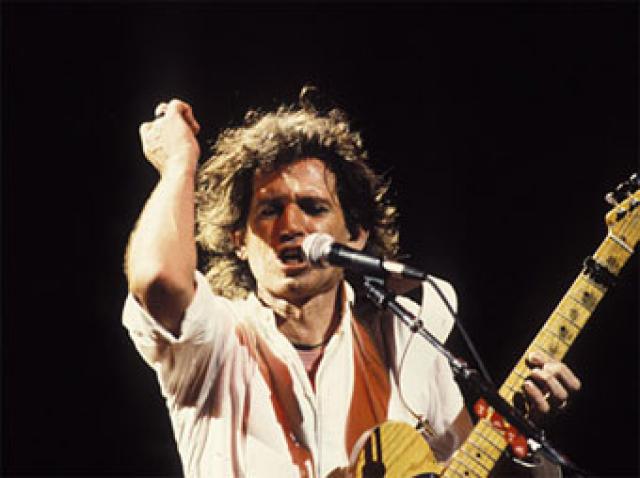
Struggle with Addiction
Throughout the early years of The Rolling Stones, Richards' musical contributions were crucial, despite his increasing drug use. He appeared as a worn-out victim of life, but still possessed the strength and energy of a young man just starting to mature. While Jagger and Jones were the center of attention, Richards quietly exerted his influence. However, his personal life was plagued by addiction. He had tried almost every drug available on the market and was particularly interested in their stimulant effects. His relationship with Anita Pallenberg, Brian Jones' girlfriend at the time, led him down a path of drug addiction. Richards and Pallenberg embarked on a years-long journey into the abyss together. By this time, Richards was a seasoned drug user. He had experimented with almost everything available on the music scene. However, his interest was not primarily in the high, but in the ability to stay awake indefinitely. The drug use escalated to the point where it threatened his life and the band's existence. In 1967, Richards and Jagger unexpectedly found themselves facing drug-related charges in court. The legal battles that followed led both of them to be arrested for several days. When it came time for the verdict, Richards remained calm, while Jagger was visibly agitated. They were released on bail, but the threat of further arrest loomed over them. For Richards, whose hatred of authority grew stronger throughout the process, the possibility of the band's disintegration became a haunting reality. The legal battles, which revolved around minuscule amounts of drugs, pushed Richards deeper into heroin addiction, which helped him cope during the periods of inactivity caused by court proceedings. When the situation eased and the band was able to work again, Richards continued to perform flawlessly, fulfilling his role in recording sessions and concerts without major disruptions, all while his drug use continued to increase. However, Jones, who couldn't go a second without drugs, became a burden. Eventually, Richards made the difficult decision to remove his guitar partner from the band. Even Jagger couldn't bring himself to make that move. Together with Watts, Richards confronted Jones, but the conversation was one-sided, with Richards doing most of the talking. Up until the recording of "Exile on Main Street" in Richards' home on the French Riviera, his musical contributions were crucial for The Stones, despite his escalating drug use. Richards had become an extreme drug addict, combining massive doses of heroin with small strips of cocaine and copious amounts of alcohol. It is a miracle that he survived. The primary reasons he didn't end up in the grave were his access to high-quality drugs, his unique physiological makeup, and his desire to keep The Stones alive. Despite his ongoing drug dependence, Richards managed to perform every concert and fulfill his responsibilities in the studio, but he no longer radiated the creative impulses that once fueled the band. By the early 1970s, his drug use had reached critical levels. His importance to the band gradually diminished, even though he continued to play a significant role. His drug-fueled adventures reached their climax in 1977 when he was arrested for drug possession in Toronto. This time, the threat of the band's breakup seemed very real, unlike in 1967. Unexpectedly, Richards made a decision to seek treatment for his drug addiction. Why? Solely for the sake of the band. He realized he had a choice: to free himself from heroin and live for some time, possibly a relatively long time, and allow The Stones to continue their existence, or to remain trapped in drugs and, sooner rather than later, say goodbye to life. Richards endured excruciating withdrawal symptoms but managed to break free from heroin. Although he experienced several relapses until 1979, he eventually conquered his addiction. Additionally, his separation from Anita Pallenberg, though not decisive, contributed to overcoming his dependency. The strength and influence of his partner, Patti Hansen, worked wonders. Richards "came back," and it was immediately noticeable. The 1978 album "Some Girls" marked The Stones' return as an energetic force. Richards spent nearly ten years isolated in the world of drugs, constantly driven by the need to obtain the next dose, surrounded by fellow heroin addicts, dealers, and parasites. One of his few connections to the outside world during this time was his care for his two children. In addition to freeing himself from drug addiction, Richards needed to escape the sick and depressing underground world that surrounded him. Along with finding solace in his life's work with The Rolling Stones, his fundamental character traits played a significant role. His worldview was based on unshakable, simple truths: every person needs a clear goal, regardless of what it may be, as well as air, food, drink, and occasionally, sex. To achieve these necessities and navigate life straightforwardly, he believed there was no need to compromise, as it only made things unnecessarily complicated. Disappointments were part of life, and one should accept them but quickly move on. Each person is responsible for themselves and their mistakes. Richards believed that money was irrelevant, whether one had it or not. His life philosophy was straightforward, and he saw no point in dissecting things meticulously. There is a short and straightforward answer to everything. Over the past fifteen years, Richards transformed from a man driven solely by instincts to a calm, self-assured pragmatist. Richards believed that the success of The Rolling Stones fully validated his worldview. Within the band, he embraced the role of a conservative protector, defending the purity of their creative vision. In the mid-1980s, when the band was on the verge of breaking up due to Jagger's ambitions for a solo career, there was a real threat that Richards would turn back to drugs. The situation was suitable for a relapse. In a panic over the potential demise of their unique creation, Richards used all his imagination to bring the prodigal son (Jagger) back to the band. He employed various means, ranging from gentle persuasion and promises of hefty profits to open threats. Jagger returned not because Richards had the best arguments, but because he believed the challenges he faced in pursuing a solo career were not worth the effort required to overcome them. Richards saw the situation differently. He was right, and Jagger eventually agreed. Jagger and Richards are often compared to an old married couple, and both acknowledge the truth in this analogy. Jagger saw Richards as a friend for many years, someone deserving of respect precisely because of their differences. Jagger always felt indebted to Richards and deeply empathized with his troubled times during severe drug addiction. Jagger believes that The Stones survived the years between 1972 and 1977 and remained a supergroup largely due to his efforts. However, he never considered expelling Richards from the band in the same way he did with Jones. Since Richards has been fully available to the band again, Jagger has believed that The Stones cannot exist without a drug-free Richards. At the same time, Richards never felt particularly deep friendship towards Jagger, despite all they went through together and the countless classic, timeless compositions they wrote. Richards considered it a given that Jagger didn't abandon him during his years of drug addiction. There is an explanation for this dating back to 1968 when Jagger had a passionate affair with Anita Pallenberg during the filming of the movie "Performance." Richards was deeply hurt by this. Although it lasted only two weeks, it greatly violated the code of honor in their friendship. It took years for the wound to heal. In Richards' view, only after all the effort Jagger put into supporting him during his drug problems were they even, nothing more. It was only when Jagger completely abandoned his plans for a solo career in 1988 and refocused on The Rolling Stones that Richards, in turn, made a grand gesture. In favor of Jagger, he even made certain changes to his fundamental musical style and became more collaborative.
Note: The generated biography has been translated from Russian and may contain some grammatical errors.


