
Lou Reed
 USA
USABiography of Lou Reed
Lou Reed was an American rock musician, poet, vocalist, and guitarist. Born Lewis Alan Reed on March 2, 1942, in Brooklyn, New York, he gained fame as the leader of the innovative New York-based band "The Velvet Underground." Reed continued his impressive solo career for over three decades, exerting a significant influence on the development of rock music and inspiring both contemporaries and younger generations. Notable figures in the Russian rock scene, such as Boris Grebenshchikov and Mike Naumenko, were influenced by Reed. He was often referred to as the "godfather of punk rock," post-punk, and noise rock. Despite this, Reed remained an independent artist who did not conform to musical trends.

Early Life and Influences
Reed was born into a supportive musical family, and at the age of 15, he participated in recording an album with the band "The Jades." However, his parents were not supportive of his emerging homosexual tendencies, subjecting him to electroshock therapy at the age of 17 in an attempt to "cure" him. This experience deeply affected Reed, and he severed ties with his parents for a long time. In the late 1950s, Reed enrolled in the Syracuse University's literature department with aspirations of becoming a writer. It was during this time that he met Delmore Schwartz, a talented poet and writer who became Reed's mentor. After Schwartz's death in 1966, Reed often mentioned him in his compositions, including the song "The House" from the album "Blue Mask."

The Velvet Underground and Solo Career
While attending university, Reed met guitarist Sterling Morrison, who later joined "The Velvet Underground." After graduating, Reed worked as a session musician in a New York recording studio, where he recorded guitar parts for various artists and wrote popular songs in various styles. Unsatisfied with his role as a background musician, Reed, along with Terry Phillips, a colleague from the studio, decided to form a band to pursue their own musical ideas, distinct from the mainstream pop scene at the time. This marked the beginning of "The Velvet Underground."

After leaving "The Velvet Underground" in 1970, Reed distanced himself from music and worked at his father's company. David Bowie, whose career was rapidly progressing, often credited Reed and Iggy Pop as significant influences. Bowie helped both Reed and Pop make a comeback in the music industry. Following Bowie's recommendation, Reed signed a record deal and released his first solo album in 1972. Titled "Lou Reed," the album featured new songs as well as compositions from his time with "The Velvet Underground." It showcased the "dirty" and raw sound characteristic of glam rock.
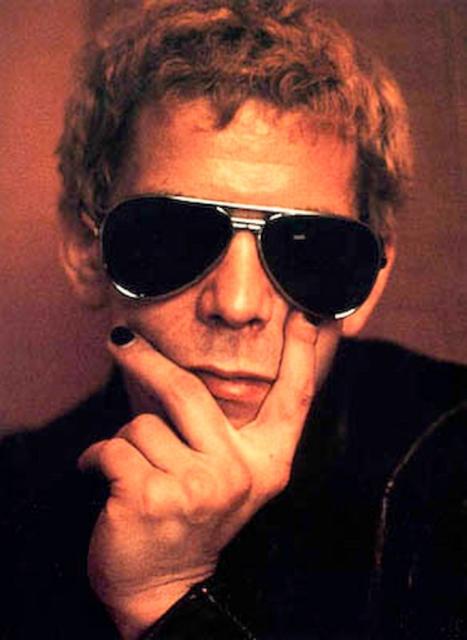
Reed achieved genuine success with the release of his second album, "Transformer," in 1972. The album, produced by David Bowie, featured popular songs like "Perfect Day," "Vicious," "Satellite of Love," and "Walk on the Wild Side." Reed expressed his desire to write simpler songs based on his life experiences and interactions with people. His songs often served as narratives about his own life or the lives of others. The success of "Transformer" solidified Reed's status as a rock star and allowed him to maintain independence from the show business industry.

Throughout the 1970s and 1980s, Reed released several albums, including "Berlin" (1973), "Sally Can't Dance" (1974), "Metal Machine Music" (1975), "Street Hassle" (1978), and "Take No Prisoners" (1978). He explored various themes and musical styles, receiving critical acclaim for albums like "Blue Mask" (1982) and "New York" (1989). Reed continued to delve into poetry, releasing collections like "Between Thought and Expression" (1992). In the late 1990s and early 2000s, Reed released albums such as "Set the Twilight Reeling" (1996), "Ecstasy" (2000), and collaborated with artists like Metallica on the project "Lulu" (2011).

Reed's music often addressed serious topics, encouraging listeners to think deeply and feel intensely. His lyrics provided social commentary and explored complex emotions. Despite facing personal struggles and the deaths of friends, Reed continued to create music until his death on October 27, 2013. His impact on the music industry and his unapologetic approach to his artistry solidified his legacy as a true rock icon.


