Khosrow II
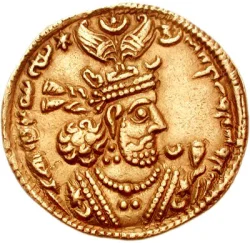
Khosrow II, also known as Khosrow Parviz, was the last great ruler of the Sasanian Empire. His reign began in 590, was interrupted briefly by a rebellion, and continued from 591 until 628. At the height of his power, his armies conquered much of the Byzantine Empire’s eastern territory, including Syria, Jerusalem and Egypt. The cost of those victories, however, helped set the stage for his overthrow and the rapid weakening of his dynasty.
A Disputed Accession
Khosrow was the son of Hormizd IV and grandson of Khosrow I, one of the Sasanian dynasty’s most celebrated kings. When a revolt led by the general Bahram Chobin displaced him in 590, Khosrow fled to the Byzantine Empire and sought help from Emperor Maurice. With Maurice’s support, he defeated Bahram and regained the throne in 591.
The alliance with Maurice shaped the early part of his reign. But when the Byzantine emperor was murdered by the usurper Phocas in 602, Khosrow used the event as a pretext to launch a new war. His forces invaded Byzantine territory and advanced across the eastern Mediterranean.
Conquests and Royal Splendor
Sasanian armies captured major cities and provinces over the next two decades. They took Jerusalem in 614 and seized the relic known as the True Cross, then conquered Egypt and advanced into Asia Minor. At the empire’s greatest extent under Khosrow, Persian forces stood within sight of Constantinople, though they never captured the Byzantine capital.
Khosrow cultivated an image of royal magnificence. He was known by the epithet Parviz, “the Victorious,” and his court became associated with lavish displays, fine metalwork and royal patronage. Later Persian literature would give a legendary treatment to his relationship with Shirin, a Christian woman who became one of the most famous figures in Persian romance.
Defeat and Overthrow
The tide turned when Emperor Heraclius led a series of campaigns deep into Sasanian territory. In 627, Byzantine forces won a major victory near Nineveh, and the Sasanian army was forced to retreat. The long war had exhausted the empire and alienated its nobles and military leaders.
In 628, Khosrow’s son Kavad II led a coup, deposed his father and had him executed. The new ruler quickly made peace with Heraclius, returning the territories and relics captured during the war. Khosrow’s death began a period of civil conflict and rapid succession that left the Sasanian state deeply weakened.
Legacy
Khosrow II’s reign combined spectacular military expansion with a disastrous overextension of imperial power. His victories temporarily brought the Sasanian Empire to its greatest territorial reach, but the war with Byzantium depleted the resources and cohesion needed to hold it together. Within a generation, the empire fell to the Arab Muslim conquests.