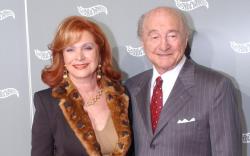
Kim Choon
 North Korea
Founder of Daewoo, Kim Woo-choong
Kim Woo-choong, the founder of the South Korean firm Daewoo, has always focused on one indicator in the company's work - revenue growth. Now, the South Korean authorities accuse him of deliberate accounting errors amounting to $40 billion, embezzlement of $9 billion, and illegal transfer of $24.6 billion out of the country. Last week, Kim Woo-choong returned to his homeland after nearly six years of absence and was arrested right at the airport. He faces a lifetime imprisonment. However, the 68-year-old businessman returned because he is more afraid of the prospect of dying in exile.
Biography of Kim Woo-choong
Kim Woo-choong was born in 1937 into a family of Korean intellectuals. His father was a university professor. However, Kim's childhood was far from comfortable and peaceful. At that time, Korea was one of the poorest countries in the world, with no prospects for development as a Japanese colony. Kim earned extra money for his family by selling newspapers during World War II and the Korean Civil War.
When Korea was divided into the North and South, Kim pursued a degree in economics at the prestigious Yonsei University in Seoul. During this time, the question on everyone's mind in Korea was whether the country could catch up with Japan, its former colonizer, in terms of economic development. The most common answer was, "Yes, because Koreans are superior to the Japanese." Kim Woo-choong fully shared this view.
In 1960, Kim Woo-choong got a job at the Economic Development Council under the government. However, he preferred practice over theory. After spending a year studying the intricacies of the Korean bureaucracy, he joined the private company Hansung Industrial.
Kim reveled in his new job. He was an excellent manager and had a good understanding of economics. The continuously growing production results filled him with joy. His first day off came in 1990 when his son died in a car accident. At the age of 29, Kim was already the director of Hansung Industrial. It was then that he decided to build his own industrial empire. And he dreamed of nothing less than an empire.
In 1967, he left Hansung and registered the company Daewoo. The word means "great universe" in Korean. Initially, Daewoo was a textile company, albeit without machinery. However, it had five employees and a capital of $10,000. Kim Woo-choong saw nothing funny in such a name. He backed up his ambitions with deeds, and deeds, with Eastern cunning, became ambitions. The results often seemed incredible. To get their first order, Kim demonstrated fabrics purchased in Hong Kong. One Singaporean entrepreneur liked the samples, and the charming presentation by the Korean convinced him, leading to a $200,000 order for Daewoo. Kim returned to Korea, used the advance payment to buy textile equipment, and within a month, established the production of the desired quality fabric.
Having found the right direction, Kim Woo-choong never looked back. In its first year of existence, Daewoo sold products worth $580,000 and opened its first overseas offices in Sydney, Australia, and Frankfurt, West Germany. The company received praise from the government of General Park Chung Hee.
Kim established a paternalistic labor relationship system within Daewoo, which was common in Eastern countries. There was an almost family-like atmosphere within Daewoo. Employees spent half of their time in the company. In return, Daewoo guaranteed them lifetime employment and career advancement based on seniority. To strengthen the family atmosphere, Kim personally visited the workshops, talked to weavers, and gave them chocolates as gifts. The Daewoo owner did not hesitate to spend the night in his own office, sleeping for a few hours on the couch.
By 1972, Daewoo's exports alone reached $40 million. By 1975, the company owned 18 enterprises in Korea and 16 subsidiaries abroad. The annual export volume reached $172 million.
But Kim Woo-choong wanted more. In 1973, he made Daewoo public to attract new capital for development. However, a textile empire could not be built on just textile factories, so Kim persistently sought opportunities in other industries.
During this time, South Korea had developed an oligarchic system in the economy. General Park Chung Hee wanted to build a powerful industrial state in Korea in a very short time. To achieve this, he consistently helped a narrow circle of favored capitalists, whom he selected based on personal qualities. The oligarchs received state-owned factories almost for free, and state banks (there were no other banks in Korea) provided them with preferential loans of practically unlimited amounts. In return, the oligarchic industrial groups (chaebols) had to demonstrate exponential export growth. Thanks to this system, the five largest chaebols accounted for more than one-third of South Korea's national GDP, and the debt of such conglomerates exceeded their assets by 5-8 times. In this system built by General Park Chung Hee, only sales growth mattered.
And this suited Kim Woo-choong perfectly. "In five years, I did what others spend 10-15 years doing," he said. In 1976, luck smiled upon him. General Park Chung Hee was impressed by Daewoo's success and remembered that Kim Woo-choong's father had been his favorite university professor. From that moment, Kim became part of the "family."
Daewoo was initially given a state-owned machine-building plant that had been incurring losses for 37 years. Taking advantage of government financing, Kim rebuilt the plant within a year and successfully began exporting its products. In 1978, the government handed him an unfinished shipyard. This was how Daewoo Heavy Industries and Daewoo Shipbuilding came into existence.
The oligarch referred to the secret of his success as "friendship with power under any circumstances and regardless of faces." He built his business on close personal relationships with leaders from France, Sudan, Pakistan, Vietnam, India, China, Libya, Iran, and many other countries. Kim Woo-choong said that "the greater the risk, the higher the profit." During the Iran-Iraq war, Daewoo built a railway tunnel in Iran, and during the American trade embargo on Libya, it received a $1.7 billion contract from Muammar Gaddafi.
Kim Woo-choong organized daily banquets with potential clients, pouring himself barley tea from a whiskey bottle. The clients were oblivious to this fact. Once, he flew to Ghana for a meeting with the head of the government there. He left in the morning and returned to Korea the same evening with a signed contract for the construction of a five-star hotel.
In the early 1990s, the diversified Daewoo group, with annual sales of around $50 billion, became the third largest chaebol in the country and made it onto the list of the world's 50 largest companies. 320,000 employees of Kim Woo-choong's industrial empire in 110 countries produced VCRs, tankers, pianos, computers, and space equipment.
Kim Woo-choong's autobiography, "The Great World Where There is Always Work" (or "Daewoo, Where There is Always Work" in Korean), was translated into 21 languages and sold a total of 2 million copies. It included Kim's own aphorism: "Losing reputation is social death." In the 1990s, Kim Woo-choong became obsessed with the idea of making Daewoo a global leader in automobile production. His chosen strategy was almost foolproof and only required money and time, of which Kim had an unlimited supply in the existing system of South Korea. Kim started building plants in underdeveloped but promising markets where competition was still weak. By 1997, Daewoo had established automobile production in Ukraine, Poland, Iran, Vietnam, India, and Uzbekistan. According to Kim's plans, Daewoo was supposed to produce 2 million cars by 2000.
However, South Korea was no longer an authoritarian country. The president was now elected, and unions had emerged in factories.
The first blow came in 1995 when a corruption scandal erupted involving the financing of former Korean president Roh Tae-woo's expenses. The head of Daewoo was taken to court for giving Roh Tae-woo a $14 million kickback for a contract to build a submarine base. In that case, the court acquitted Kim Woo-choong, finding no personal interest in his actions. While other chaebol leaders, such as Samsung or LG, were urgently reducing their debts and trying to increase profitability, Kim Woo-choong continued to firmly believe that the government would support his "universe" forever.
In May 1997, speaking at Boston University, Kim Woo-choong said, "From the very beginning, we focused on the future and the global market simultaneously. We changed the management of Korean companies that worked in the domestic market, and now we are writing a new chapter in global corporate history." Then the Asian financial crisis struck, and Daewoo's debts began to skyrocket.
Kim asked the government for financial assistance. Officials agreed but demanded that Daewoo sell its foreign assets. For the oligarch, this meant saying goodbye to his dream of having the largest company, so he refused. Daewoo tried to survive on its own, issuing bonds worth $13.5 billion within a few months.
The constant stress took a toll on Kim Woo-choong's health. In 1998, he underwent emergency surgery to remove a brain aneurysm. Creditors continued to press him. "All the financiers in the world demanded payment from us, and we couldn't," Kim recalled. It was bankruptcy. In a final desperate attempt to save Daewoo, he proposed a payment deferment plan in exchange for pledging $8.5 billion worth of company assets plus $1 billion from his personal fortune. But the plan was rejected, and in August 1999, the Korean government took control of Daewoo. As it turned out later, Kim Woo-choong and other top managers of the group had been "improving" the financial statements for three years, and the real debts of Daewoo exceeded $65 billion.
In August 1999, immediately after the ceremonial opening of assembly production in China, Kim disappeared. As he later stated, then-Korean President Kim Dae-jung "clearly told me over the phone: leave for some time."
Exhausted, suffering from severe depression, Kim cut off almost all contacts for a year, did not read newspapers, and did not even talk to his wife. "I just wanted to forget everything," Kim said. For the next few years, apart from labor unions, no one looked for him. He traveled the world, staying with long-time business partners.
Now, at the age of 68, Kim Woo-choong has decided to return to his homeland to restore his honor. "I have never been corrupt or sold out," he claims. But to prove this, he will have to win a legal case that 19 of his colleagues have already lost. Until the mid-1980s, Koreans worked 12-hour days, six days a week. The ruling military junta did not distinguish between the work discipline of a worker and a director. Labor conflicts were resolved with the help of soldiers, tear gas, and batons - anyone who protested was arrested. But Korea developed at an incredible pace. In the early 1960s, the average Korean earned $100 per year, less than in India. Thirty years later, the annual per capita income reached $8,500, which was 30 times more than in India.