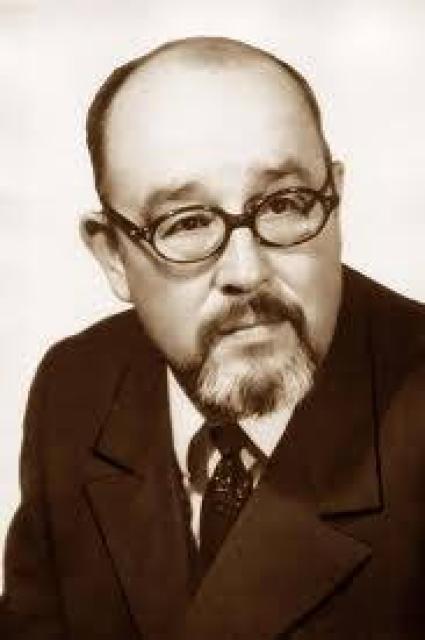
Kim Vasin
- Kim Vasin: A Literary Legacy
- Journalism and Teaching
- Academic and Literary Achievements
- Literary Scholarship
- Translations and Linguistic Contributions
- Literary Legacy
Kim Vasin: A Literary Legacy
Early Life and EducationKim Vasin, a prominent Mari writer, critic, and educator, was born into a family of intellectuals in the 1920s. His grandfather was a Mari pagan priest, instilling in him a deep appreciation for his cultural heritage. After attending a local elementary school, Vasin studied at a medical school in 1941 and later worked as a health worker.
Journalism and Teaching
In 1942, Vasin began his journalism career at the "Mari Kommuna" newspaper. He later pursued a degree at the Mari State Pedagogical Institute (1948-1952), earning a doctorate in philology. After teaching at a teacher's institute, Vasin served as an editor for the Mari Book Publishing House.
Academic and Literary Achievements
From 1963 to 1987, Vasin worked as a researcher at the Mari Research Institute of Language, Literature, and History. He lectured at universities and was a member of the editorial board of the "Ончыко" journal.
Vasin's literary debut occurred in 1940 with the publication of several short stories. His works addressed themes of national independence, social justice, and interethnic relations, drawing inspiration from historical figures such as Emelyan Pugachev and Stepan Razin. Among his most notable works are "Murom Apushot" ("The Singing Smith"), "Shiy Mundura" ("The Silver Ball"), and "Pugachyov Dekke" ("To Pugachev").
Literary Scholarship
Kim Vasin gained recognition for his contributions to Mari literary scholarship. His books "Pages of Friendship" and "Creative Interconnections of Mari Literature" explored the interrelationships within Mari literature and its connections to other cultures. He wrote critical essays on writers including Sergei Chavain, Nikolai Mukhin, and Vasily Kolumb.
Translations and Linguistic Contributions
Vasin translated works by Russian and Western authors into Mari, including Pushkin, Gogol, and Shakespeare. His own works were translated into multiple languages, including English, French, and German. He also compiled biographical and bibliographical references on Mari literature.
Literary Legacy
Kim Vasin's membership in the Union of Soviet Writers (1953) further solidified his literary status. His work continues to inspire and inform the Mari literary tradition, enriching the cultural landscape of the Mari people.


