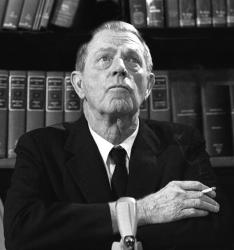
Mark Aldanov
 Russia
- Mark Aldanov: A Russian Writer of History and Revolution
- Literary Debut and Anti-Bolshevism
- Exile and "Sovremennye Zapiski"
- The Revolutionary Cycles
- The Role of Chance in History
- Historical Characters and Portraits
- "The Ulm Night" and the Philosophy of Chance
- "The Story of Death" and Balzac's Last Days
- Legacy and Death
Mark Aldanov: A Russian Writer of History and Revolution
Early Life and EducationMark Aldanov (1886-1957), born Mark Landau in Kiev, Ukraine,was a multifaceted Russian writer and intellectual. After graduating with degrees in physics and law, he excelled as a chemist and published significant research in the field.
Literary Debut and Anti-Bolshevism
In 1915, Aldanov made his literary debut with a critical study on Leo Tolstoy and Romain Rolland. He later served as secretary of the anti-Bolshevik Union for the Rebirth of Russia and traveled to European capitals to seek support for the struggle against the new regime.
Exile and "Sovremennye Zapiski"
In 1919, Aldanov emigrated to Paris, where he lived and worked for most of his life. From 1921 onwards, he became a regular contributor to the literary journal "Sovremennye Zapiski," where he published his major works before World War II.
The Revolutionary Cycles
Aldanov's literary output can be divided into two primary cycles. The first, a tetralogy on the French Revolution and Napoleon, includes "The Thinker," "St. Helena, Little Island," "The Ninth of Thermidor," "The Devil's Bridge," and "The Conspiracy." The second, a trilogy set during the Russian Revolution, consists of "The Key," "Flight," and "The Cave."
The Role of Chance in History
Aldanov's work is characterized by its exploration of the transformative role of chance in historical events. He argued that significant events often occur spontaneously and unpredictably, and that even when they repeat themselves, they fail to provide humanity with meaningful lessons.
Historical Characters and Portraits
Aldanov's novels and stories feature a cast of both fictional and historical figures. In the Revolutionary Cycle, he portrays Pavel I, Alexander I, Robespierre, and Nelson. In his later historical portraits, he examines prominent figures such as Sadi Carnot, Hitler, Stalin, and Azef.
"The Ulm Night" and the Philosophy of Chance
During the American period of his career, Aldanov published "The Ulm Night," a philosophical treatise challenging the idea of progress in history. He argued that it is impossible to establish universal laws that govern historical outcomes.
"The Story of Death" and Balzac's Last Days
One of Aldanov's most significant late works was "The Story of Death" (1953), which recounts the final years of Honoré de Balzac and focuses on the political turmoil of the 1848 French Revolution. Aldanov emphasized the subjective and often biased nature of historical judgments.
Legacy and Death
Mark Aldanov remained a prolific writer and intellectual until his death in Nice, France in 1957. His work continues to provide insights into the complexities of historical events and the human experience.