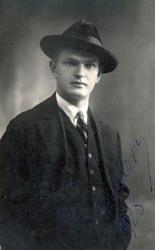
Klaus Mann
 Germany
Biography of Klaus Mann
Klaus Mann, a German novelist, essayist, and playwright, was born into a world-famous literary family on November 18, 1906. Unlike his sister Erika, who immediately pursued an acting career, Klaus took a long time to make a definite decision about his own path in life. He always seemed hesitant and shrugged off any pressure to live up to the legacy of his great father, the renowned writer Thomas Mann.
Early Life and Career
Growing up in the shadow of his father was not easy for Klaus. While Erika embraced the performing arts, he had no talent or interest in acting. It was physically impossible for him to surpass his father's literary fame, and the bourgeois ideals of his family discouraged such competition. The world of theater remained an unattainable dream for Klaus. However, in 1925, a fortuitous meeting with Gustav Grundgens, an outstanding actor, would change both of their lives.
Emigration and Struggles
Following his father's footsteps, Klaus Mann emigrated from Germany in 1933 after the Nazis came to power. Meanwhile, Grundgens stayed behind and found favor with the Bavarian Minister-President, Hermann Goring, becoming one of the most favored theater actors of the Third Reich. This circumstance caused Klaus tremendous suffering since he held deep feelings for Grundgens, more than just admiration as a fan. These feelings were frowned upon by society due to their familial relationship. Klaus Mann's novel "Mephisto: The History of a Career," written in 1936, became a confession of love and revenge toward the man who had been left behind (as Grundgens remained unaware of Klaus's true emotions, being traditional in all respects).
Rehabilitation and Controversy
In 1949, when Gustav Grundgens was rehabilitated and cleared of accusations of collaboration with the Nazi regime, the rehabilitation process took a toll on Klaus Mann. Publishers refused to print "Mephisto," and in response, the author tragically took his own life. In 1969, the infamous novel was banned in the Federal Republic of Germany for being offensive to the memory of the great actor. It was only twelve years later that a Hungarian director, using West German funds, cast actors from East Germany in the film adaptation of "Mephisto," which achieved success. However, the author of the novel seemed to be forgotten amidst the acclaim for the film.