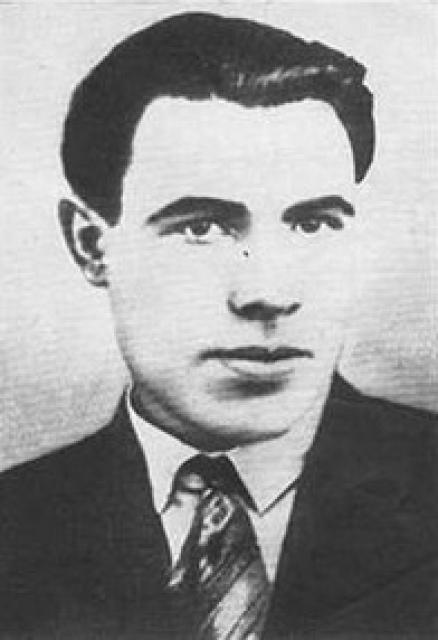
Kono Racin
 Macedonia
- Early Life and Family Background
- Self-Education and Literary Influences
- Political Activism and Literary Beginnings
- Significant Contributions to Macedonian Literature
- Emigration Attempt and Persecution
- Legacy and Recognition
Early Life and Family Background
Kočo Racinwas a renowned Macedonian poet, writer, and literary critic. He was born into a family of potters in Veles, Macedonia, where his father, Apostol Solov, worked as a potter. At the tender age of thirteen, Racin was forced to abandon his studies at the local gymnasium to assist his family and replace his ailing father in the pottery workshop.
Self-Education and Literary Influences
Despite his limited formal education, Racin embarked on a journey of self-education, mastering Russian, Czech, and French. He immersed himself in the works of literary giants such as Hristo Botev, Heinrich Heine, Maxim Gorky, Isaac Babel, and Miroslav Krleža, whose writings deeply influenced his own.
Political Activism and Literary Beginnings
At the age of twenty, Racin became a leader of communist youth organizations in Veles. His political activities led him to Dresden, Germany, as a delegate to the Fourth Congress of the Communist Party of Yugoslavia (CPY). Inspired by Croatian writer Stevan Galogža, Racin began to write poetry, initially in both Macedonian and Serbo-Croatian.
Significant Contributions to Macedonian Literature
Racin's poetry collection "White Dawns" ("Beli Mugri"), published in Zagreb in 1939, made a significant contribution to modern Macedonian literature. The collection helped shape the contemporary Macedonian language and established Racin as a key figure in the Macedonian literary canon. In addition to poetry, Racin also wrote novels, published posthumously, and authored essays on topics ranging from Bogomilism to Hegel's philosophy.
Emigration Attempt and Persecution
In 1931, Racin attempted to emigrate to the Soviet Union, but was apprehended by the police and returned to his homeland. His political activities and literary writings continued to draw the ire of the authorities, leading to imprisonment and surveillance.
Legacy and Recognition
Tragically, Racin was killed in action while fighting as part of a communist partisan detachment during World War II. In the Republic of Macedonia, he is revered as a central figure in the national pantheon, while in Bulgaria, he is considered a Bulgarian writer from Macedonia. Racin's legacy continues to inspire and influence generations of Macedonian artists and intellectuals.


