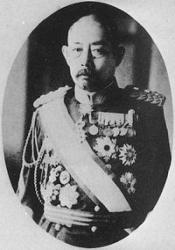
Koretika Anami
 Japan
Japan- Early Life and Career
- Senior Military Appointments
- Role in the Military Government
- Invasion of China
- Second Front and War with the USSR
- War Minister and the End of the War
Early Life and Career
Korechika Anami was born in Oita, Japan, in 1887. He graduated from the Military Academy in 1906 and rose through the ranks of the Imperial Japanese Army, holding high-ranking positions both in the military and at court. As the Emperor Hirohito's military adjutant, Anami enjoyed the emperor's personal trust.
Senior Military Appointments
In 1926, Anami became the emperor's aide-de-camp. He served in command positions in the Imperial Guard from 1933 to 1934, and was the superintendent of the Tokyo Military Preparatory School from 1934 onwards. Known for his equestrian and fencing skills, Anami earned the respect of his peers.
Role in the Military Government
From 1937 to 1938, Anami headed the General Affairs Bureau of the War Ministry. In 1938-1939, he commanded the 109th Division in China. From July 1939 to July 1941, Anami served as Vice Minister of War in Prince Fumimaro Konoe's cabinet, under the direct supervision of General Hideki Tojo.
Invasion of China
Anami emerged as a key figure in the "war party" that engineered Tojo's appointment as Prime Minister. After becoming the Air Inspector in October 1941, Anami commanded the 11th Army in China from November 1941. He developed the plan for the second offensive against Chiang Kai-shek, leading his army to significant victories against the Chinese forces in early 1942.
Second Front and War with the USSR
In October 1943, Anami took command of the Second Front in Manchuria, which later extended its jurisdiction to include Japanese forces in Indonesia and New Guinea. Despite his initial support for maintaining neutrality with the Soviet Union, Anami eventually approved the escalation of tensions on the Soviet-Manchurian border.
War Minister and the End of the War
Following the formation of the Suzuki cabinet in April 1945, Anami became Minister of War. While agreeing to the Navy Minister's request for Soviet mediation in peace negotiations with the Western Allies, Anami vehemently opposed the surrender terms presented at the Potsdam Conference. As a staunch advocate for continuing the "holy war for the defense of our divine land," Anami became the leader of the "war party."
However, as a loyal and unwavering monarchist, Anami remained committed to the emperor's will. After Emperor Hirohito's public declaration of surrender on August 11, 1945, Anami worked to expedite the end of the war. He refused to join a conspiracy organized by hardline military officers, which ultimately failed. Learning of the plot's failure, Anami committed seppuku (ritual suicide), penning a suicide note expressing his belief in the eternal nature of Japan and seeking forgiveness for his shortcomings.