
Korey Baruta
 Australia
- Anorexia Nervosa: A Personal Account
- Hunger as a Self-Harm Tool
- Depression and Isolation
- Family Concern and Denial
- Misdiagnosis and Persisting Struggles
- Body Dysmorphic Disorder and Suicide Ideation
- Forced Weight Gain and Psychiatric Care
- Cognitive Shift and Healing
- Body Image and Self-Acceptance
Anorexia Nervosa: A Personal Account
Early Onset and Obsessive BehaviorsIn her tender age of 15, Melbourne's Cori Baruta succumbed to the clutches of an eating disorder. Driven by obsessive calorie counting and extreme food restriction, Cori's weight plummeted to a mere 35 kilograms. Her emaciated form prompted her to don baggy clothing to conceal the horrors of her dwindling body.

"I started cutting back on food as a method of weight loss," Cori recalls. "I became more rigid with my intake, what I was and wasn't allowed to eat, how much I was allowed."

Hunger as a Self-Harm Tool
As Cori's eating disorder progressed, a perverse sense of pride emerged when her weight diminished. She experienced a "weird, euphoric feeling" with each pound shed. However, the compulsion to restrict grew stronger, demanding "smaller and smaller sizes of me."

"I felt like I deserved this," Cori admits. "Starving myself became my own form of self-harm. It was my way of trying to destroy myself."

Depression and Isolation
While initial weight loss sparked compliments, Cori's mental state deteriorated. Her self-esteem plummeted, and depression enveloped her. She became hopeless and isolated.

"Losing weight became symbolic of my fading away. I hoped that if I kept shrinking, I'd eventually disappear. I imagined decomposing, being reduced to dust."

Family Concern and Denial
Despite Cori's devastating physical and mental decline, her family and friends initially praised her. "People would stop me in the street and tell me how amazing I looked, that I should be a model," she remembers. "It made me feel good about myself for the first time in my life."

However, her mother's concern grew until she confronted Cori about her suspected eating disorder. Despite initial denial, Cori reluctantly sought professional help.

Misdiagnosis and Persisting Struggles
The initial therapist downplayed Cori's weight loss, leading to a series of misdiagnoses. Meanwhile, Cori's academic perfectionism compounded her struggles.
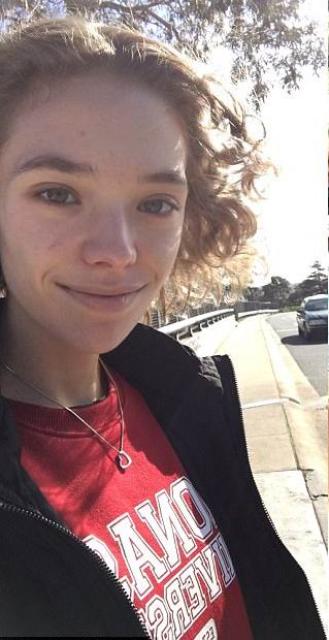
"I was a perfectionist, always aiming for an unrealistic standard," she explains. "No matter how well I did, it was never enough."

Body Dysmorphic Disorder and Suicide Ideation
Cori's condition escalated into body dysmorphic disorder. She hallucinated her appearance, seeing herself as grotesque. While a part of her recognized her skeletal frame, another demanded further "thinning and shrinkage."

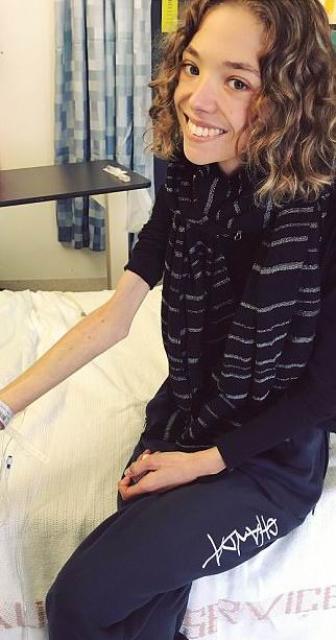
Diagnosed with anorexia nervosa, Cori was eventually hospitalized. "I spent a week in a medical ward, where they stabilized me with fluids and bed rest," she says. "They tried to force me to eat, but I refused."
Forced Weight Gain and Psychiatric Care
Cori was transferred to a psychiatric hospital specializing in eating disorders. Under strict supervision, she was force-fed and gained 20 kilograms. "Honestly, I didn't choose recovery. I was forced into it," she confesses. "The hardest part of anorexia recovery is your mind, which is so sick from starvation. You need to gain weight to restore it, but your mind won't let you."

Cognitive Shift and Healing
As Cori approached a healthy weight, the effectiveness of medication and therapy became evident. Her thought patterns gradually shifted.
"The turning point was realizing that suicide and self-destruction were not the answer," Cori says. "I'm still working on my recovery, but I'm in a different headspace now."
Body Image and Self-Acceptance
Cori has come to understand the superficiality of external appearance. "I've learned that our worth is not in how we look, and that what we look like will never change who we are on the inside."


