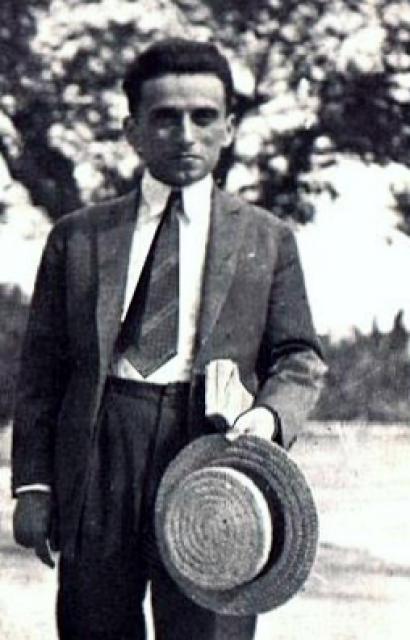
Kostas Karyotakis
 Greece
- Kostas Karyotakis: A Trailblazing Greek Poet
- Bureaucratic Disillusionment and Catharsis
- Literary Debut and Critical Reception
- Romantic Attachment and Personal Struggles
- Travel and Poetic Evolution
- Despair and Suicide
- Posthumous Recognition
Kostas Karyotakis: A Trailblazing Greek Poet
Early Life and EducationKostas Karyotakis, a renowned Greek poet, was born in Tripolis. His father's engineering profession led to frequent relocations, exposing Karyotakis to various cities throughout Greece. He published his early poetic endeavors in children's magazines in 1912. After graduating from the Athens School of Law and Political Sciences in 1917, Karyotakis opted against a legal career.
Bureaucratic Disillusionment and Catharsis
Karyotakis joined the Prefecture of Thessaloniki. However, his distaste for his work inspired poetry that explored themes of bureaucracy. His prose, "Catharsis," further denounced the subject, resulting in his transfer to another region. His experiences during the arduous war period painted a bleak picture of Greece.
Literary Debut and Critical Reception
In February 1919, Karyotakis's first poetry collection, "The Pain of Man and Things," received mixed reviews amidst negative criticism. That same year, he co-founded the satirical magazine "The Calf." Despite its popularity, the publication was banned after six issues. In 1921, he published his second collection, "Nepenthe."
Romantic Attachment and Personal Struggles
A romantic relationship blossomed between Karyotakis and Maria Polydouri in 1922. In 1923, he penned the controversial poem "Pale Spirochete," prompting speculation about his health. Rumors emerged that he suffered from syphilis, then considered incurable.
Travel and Poetic Evolution
Karyotakis traveled abroad in 1924, visiting Germany and Italy. In 1927, he published his final collection, "Elegy and Satire." He spent time in Paris in 1928 before being transferred to Preveza. His letters during this period reflected his despair and dissatisfaction.
Despair and Suicide
In July 1928, Karyotakis attempted to drown himself in Monolite but failed. He returned home, purchased a revolver, and spent hours smoking in a café. At Agios Spyridon's shore, under the canopy of an eucalyptus tree, he ended his life by shooting himself in the heart.
Posthumous Recognition
Literary recognition eluded Karyotakis during his lifetime. It was not until the 1970s that critics reevaluated his work and hailed him as "a unique figure in Greek literature." His legacy continues to inspire generations of poets and readers.



