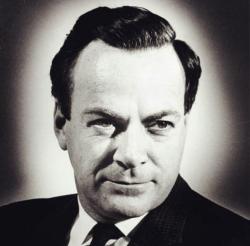
Kurt Binder
 Austria
- Kurt Binder: Pioneer in Condensed Matter Physics
- Early Life and Education
- Academic Career
- Research Contributions
- Personal Life
- Honors and Awards
- Max Planck Medal (2006)
Kurt Binder: Pioneer in Condensed Matter Physics
Kurt Binder, an Austrian theoretical physicist, has made significant contributions to condensed matter physics and statistical physics, both through analytical theory and computer modeling.
Early Life and Education
Binder was born in Korneuburg, Austria (then part of Germany), on February 12, 1944, to Eduard Binder, an engineer, and Anna Binder (née Eppel). He attended school in Vienna from 1950 to 1962.
Academic Career
In 1967, Binder received his PhD in physics from the University of Vienna. He subsequently held postdoctoral positions at the University of California, Berkeley, and the University of Munich. In 1973, he completed his habilitation at the Technical University of Munich, receiving the title of "Habilitated Doctor."
Research Contributions
Binder's research focuses on phase transitions and critical phenomena in complex systems, particularly polymers and spin glasses. He has made groundbreaking contributions to these fields, including the development of Monte Carlo simulations and the analysis of critical scaling laws.
Personal Life
Kurt Binder is married to Marlis Eckert and has two sons, born in 1978 and 1981. He resides in Mainz, Germany, where he continues his research and mentorship activities.
Honors and Awards
Binder's work has been recognized with numerous prestigious awards, including:
Max Planck Medal (2006)
Boltzmann Medal (2012)Lorentz Medal (2013)
Legacy
Kurt Binder is considered one of the leading figures in condensed matter physics and statistical physics. His research has laid the foundation for our understanding of phase transitions and the behavior of complex systems. His work continues to inspire future generations of scientists and drive significant advances in these fields.