Lado Asatiani
- Childhood and Family
- Love of Language and Literature
- Education and Poetry Debut
- Family Loss and Political Turmoil
- Move to Tbilisi
- Military Service and Health Challenges
- Prolific Literary Years
- Inspiration and Symbolism
- Legacy and Remembrance
Childhood and Family
Ladiko (Ladiko Asatiani)was born on June 30, 1915, in the village of Bardnala in the Lechkumi region of Georgia. His grandfather, Guju Asatiani, owned land, fields, and walnut trees. However, in 1930, he was labeled a "kulak" (wealthy peasant) and lost his property. Guju passed away on that fateful night.
Ladiko's father, Melkisedeki, moved the family to Kutaisi with his wife and three children. Ladiko attended seven grades at the Kutaisi experimental school and continued his education at the agricultural technical school. The family returned to their ancestral home, where his parents taught at a school in Bardnala. Ladiko transferred to the agricultural technical school in Tsageri to be closer to his family.
Love of Language and Literature
Ladiko's father cherished poetry, reciting poems by Grigol Orbeliani. He believed that language was the key to a thriving nation. Ladiko, inspired by Baratashvili and Vazha-Pshavela, also memorized passages from the Bible.
Education and Poetry Debut
At age 17, Ladiko enrolled in the Department of Natural Sciences at the Kutaisi Pedagogical Institute but later switched to the Department of Georgian Language and Literature. His first poem, "February Morning," was published on February 25, 1936, in the Kutaisi newspaper "Stalinelli."
Family Loss and Political Turmoil
In 1937, Ladiko's mother was arrested by the "troika" and sentenced to exile. Witnessing his mother's arrest devastated Ladiko, and he was briefly expelled from the institute but later reinstated. His mother's imprisonment profoundly affected him, and he became hesitant to return to Lechkumi, expressing his longing for home in his poetry.
Move to Tbilisi
In 1938, Ladiko moved to Tbilisi, initially relying on fees from newspapers. He eventually became an editor and met Aniko Vachnadze, who became his wife and mother of their daughter, Manana.
Military Service and Health Challenges
Despite suffering from tuberculosis, Ladiko was drafted into compulsory military service in 1939. However, due to his illness, he was discharged. He received medical treatment twice in Abastumani but without significant improvement.
Prolific Literary Years
The last three years of Ladiko's life were incredibly productive and pivotal in his career. In 1941, his first book, "Poems," was published. The poet, aware of his mortality, raced against time to express his thoughts and emotions. The following year, the publishing house "Federation" released a proof copy of his collection "Ancestors," but the book was never officially published due to the war.
Inspiration and Symbolism
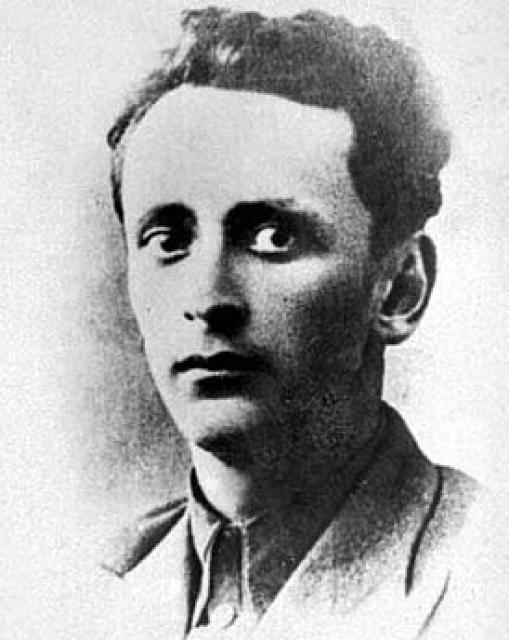
Ladiko deeply admired the artist Niko Pirosmani and considered himself a Georgian poet first and foremost. He loved strolling along Rustaveli Avenue, his tall, slender frame and piercing blue eyes drawing attention. He often paused at the sycamore tree on Alexander Chavchavadze Street to reflect and engage in conversations about topics close to his heart: homeland, Pirosmani, and poetry.
Ladiko introduced the poppy flower as a symbol in Georgian poetry, representing both the blood of heroes and the ideals of peace, happiness, and beauty. One of his most famous poems, "Salagobo," explores themes of struggle and hope, filled with uniquely "Asatian" passion and a deep love for his homeland.
Legacy and Remembrance
Ladiko Asatiani's influence continues beyond his physical presence. His poetry resonates with readers, even those unfamiliar with the genre. He was laid to rest in the Pantheon of Georgian Writers and Public Figures in Didube in 1968. His spirit lives on through his literary legacy, a testament to his love for language, culture, and the human spirit.