Laimdonis Grasmanis
- Early Life and Education
- Career as a Stage Designer
- Transition to Film
- Artistic Practice
- Personal Life and Legacy
Early Life and Education
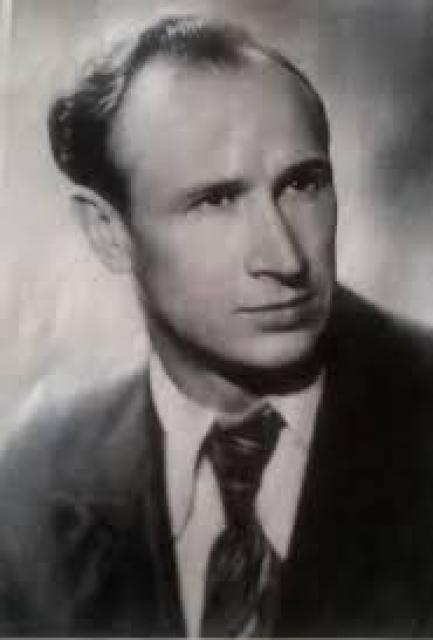
Hermanis Grasmanis was born on May 12, 1916, in Russia, during World War I, to a family of refugees. He was raised in Liepāja, Latvia, by adoptive parents.
Grasmanis graduated from the decorative arts department of the Liepāja School of Applied Arts in 1937. He then studied at the Figure Painting Workshop of the Latvian Academy of Arts from 1937 to 1942.
Career as a Stage Designer
Before graduating, Grasmanis began working as a stage designer at the Liepāja City Theater of Drama and Opera (1934-1937). He then worked at the itinerant theater (1940-1941) and the People's Theater (1942-1944).
From 1945 to 1954, Grasmanis served as the chief designer of the A. Upītis National Theater of Drama. He worked in a realistic style and often designed costumes for the productions he worked on.
Transition to Film
In 1954, Grasmanis became a staff designer at the Riga Comedy Theater. In 1957, he joined the Riga Film Studio as a production designer. He won an award at the Festival of the Baltic Republics and Belarus for his work on the film "The Sword and the Rose" (1960).
Artistic Practice
In addition to his work as a stage designer, Grasmanis also exhibited his paintings, primarily landscapes and portraits, from 1937 onwards. He often depicted his colleagues in theater and film.
Personal Life and Legacy
Hermanis Grasmanis was a member of the Union of Artists (1945) and the Union of Filmmakers (1962). He was married to the artist Lilija Grasmane. His daughter, Ilze Bumane-Grasmane, published a memoir about him in 1996.
Grasmanis passed away in Riga and is buried at the Forest Cemetery. His grave bears a monument sculpted by Kārlis Baumanis.