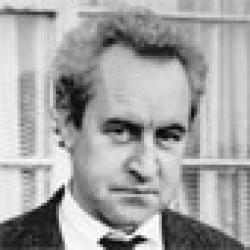
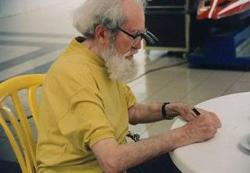
Lajos Kassak
 Hungary
- Lajos Kassák: Hungarian Writer and Artist
- Parisian Influence and Avant-Garde Beginnings
- Literary and Artistic Contributions
- Revolutionary Politics
- "MA" Magazine and Bauhaus
- Return to Hungary and Later Career
- Later Years and Legacy
Lajos Kassák: Hungarian Writer and Artist
Early Life and ActivismLajos Kassák, a prominent figure in Hungarian avant-garde art, was born in 1887. In 1904, he moved to Budapest and aligned himself with the trade union and social democratic movement.
Parisian Influence and Avant-Garde Beginnings
From 1907 to 1910, Kassák resided in Paris, where he encountered influential artists such as Guillaume Apollinaire, Blaise Cendrars, Robert Delaunay, and Pablo Picasso. This experience ignited his passion for avant-garde expressionism, futurism, dadaism, and surrealism.
Literary and Artistic Contributions
Upon returning to Budapest, Kassák co-founded the avant-garde journal "A Tett" with Emil Szittya. He penned expressionist poems, dramas, and novels. His artistic pursuits included collages, graphic arts, and abstract paintings.
Revolutionary Politics
Kassák held staunch left-wing beliefs and participated actively in the Hungarian Revolution of 1919. He served as a member of the "Writers' Directorate" and engaged in intense debates with Béla Kun.
"MA" Magazine and Bauhaus
In 1921, Kassák edited the influential magazine "MA" ("Today"), which featured the works of prominent avant-garde artists such as Kurt Schwitters, Oskar Schlemmer, and László Moholy-Nagy. He also co-authored the seminal "Book of New Artists" with Moholy-Nagy.
Return to Hungary and Later Career
Kassák returned to Hungary in 1926 and held editorial positions in various avant-garde publications. In 1947, he rejoined the Hungarian Social Democratic Party, which later merged with the Hungarian Communist Party. However, his writings faced censorship, and he was expelled from the party in 1953.
Later Years and Legacy
Despite the suppression of his literary work, Kassák continued to paint throughout the 1950s. The Lajos Kassák Museum in Budapest currently houses a vast collection of his artistic and literary creations, preserving his indelible mark on Hungarian avant-garde.