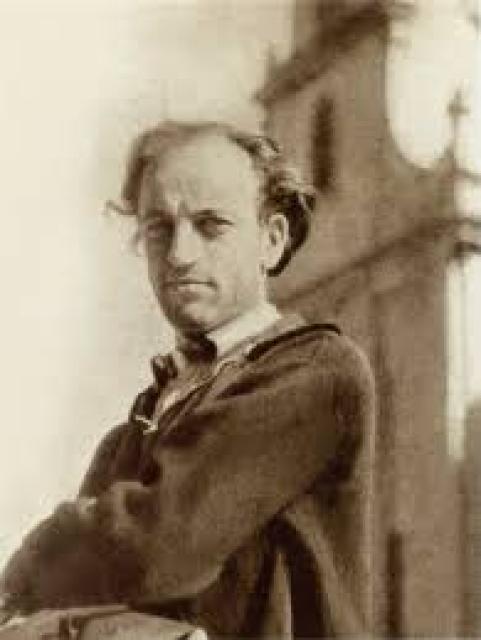
Lajos Vajda
 Hungary
- L&225;j&243;s Vajda: The Versatile Hungarian Artist
- Paris and Surrealism
- Return to Hungary and Evolving Techniques
- Recognition and Legacy
L&225;j&243;s Vajda: The Versatile Hungarian Artist
Early Life and InfluencesBorn in Hungary, Vajda spent his childhood in Belgrade, Serbia, where he became fluent in the Serbian language, an influence later evident in his artworks featuring Cyrillic letters. He moved to Szentendre, a suburb of Budapest, at the age of 15 and enrolled in the Academy of Fine Arts in Budapest in 1927. Deeply inspired by Russian avant-garde, especially Alexander Rodchenko, Vajda experimented with graphic works in the late 1920s, embracing vanguard aesthetics.
Paris and Surrealism
In 1930, Vajda was expelled from the academy due to his left-wing views and subsequently moved to Paris. There, he encountered surrealism and was greatly influenced by cinema. His Parisian period was characterized by collages combining newspaper clippings pasted onto yellow paper, creating multilayered compositions.
Return to Hungary and Evolving Techniques
Upon his return in 1934, Vajda transitioned into distinct artistic phases. He continued his collage technique, producing graphic works featuring multiple narratives superimposed on single sheets. Subsequently, he developed a fascination with Orthodox icons, creating numerous portraits in a style imitating canonical iconography. Vajda also created series on masks and visions, possibly reflective of his contemplation on the horrors of war. His final works consisted of large-scale graphic compositions comprised of intricate, coal-drawn lines depicting monstrous figures.
Recognition and Legacy
Vajda's wife, Julia Vajda (née Richter), was a renowned artist in her own right. Lájós Vajda succumbed to tuberculosis in 1941. The Lajos Vajda Museum in Szentendre stands as a tribute to his artistic legacy, showcasing his diverse body of work as a leading figure of the "Young Artists of Szentendre" group and a pioneer of Hungarian avant-garde.




