Lapulapu
- Origins and Background
- Mactan and the Spanish Expedition
- The Battle and Its Meaning
- Legacy and Recognition
Lapulapu emerges from the historical record at one dramatic moment: the clash on Mactan Island in April 1521 that ended with the death of Ferdinand Magellan. The surviving accounts reveal little about the ruler’s childhood or private life, but they identify him as a leader who resisted the demands of a powerful foreign expedition. Over the centuries, that stand made Lapulapu a lasting symbol of local sovereignty and resistance.
Origins and Background
Almost nothing is known with certainty about Lapulapu’s birth, family, upbringing or education. The principal early written account is that of Antonio Pigafetta, an Italian participant in Magellan’s expedition. Pigafetta records the name as Çilapulapu and identifies him as a ruler of Mactan, an island in the central Philippines today. Since the Philippines as a nation did not yet exist, it is more accurate to describe Lapulapu as a local leader in the Visayas than to project later national identities onto his life.
Mactan and the Spanish Expedition
In 1521, Magellan’s fleet reached the islands during its voyage across the Pacific. Magellan made contact with local rulers, including Rajah Humabon of Cebu, and sought to extend Spanish authority and Christian influence. Pigafetta’s account describes a dispute involving Mactan: one local leader was willing to comply with Magellan’s demands, while Lapulapu refused.
The disagreement became a military confrontation. On April 27, Magellan led a force to Mactan. His men faced defenders on the shore, where shallow water and difficult terrain hindered the landing and limited the effectiveness of their weapons. The Mactan fighters drove the expedition’s force back. Magellan was killed during the fighting, and the surviving Europeans retreated to their ships.
The Battle and Its Meaning
Pigafetta’s narrative is the fullest eyewitness account, but it was written from the expedition’s perspective and provides only a partial view of events. It does not give a detailed portrait of Lapulapu’s strategy or motives, nor does it establish that he personally struck the fatal blow against Magellan. Later stories often place Lapulapu at the center of the battle and credit him with killing the explorer, but the surviving evidence supports the more careful conclusion that Mactan’s defenders defeated Magellan’s force and that Magellan died in the encounter.
The victory mattered beyond the battlefield. It demonstrated that the expedition’s claims of authority could be resisted, and it disrupted Magellan’s plans at a critical stage of the voyage. Lapulapu’s action was rooted in the political realities of Mactan and its relationship with neighboring rulers; the sources do not allow a confident reconstruction of his precise aims.
Legacy and Recognition
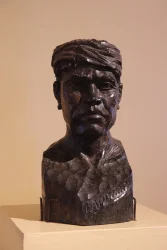
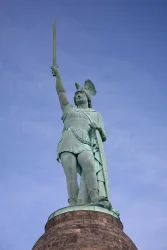
In the centuries after 1521, Lapulapu’s story became part of the historical memory of the Philippines. He is widely honored as a hero and an emblem of resistance to colonial conquest. Public monuments, commemorations and the naming of Lapu-Lapu City keep that legacy visible. The National Historical Commission of the Philippines stresses that reliable information about him is scarce and regards many popular biographical details as speculative.
That tension between a powerful legacy and a thin historical record is central to Lapulapu’s story. The broad outline of his role at Mactan is preserved in an eyewitness chronicle; the details of his life remain largely unknown. His name endures because the stand attributed to him became much larger than the limited record that first carried it into history.