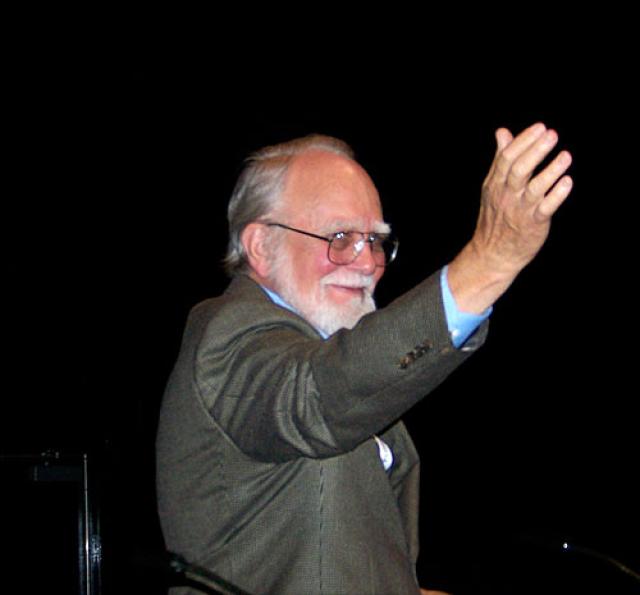
Larry Austin
 USA
USA- Larry Austin: An American Composer
- Early Life and Education
- Career and Teaching
- Notable Works
- Later Works and Legacy
Larry Austin: An American Composer
Larry Austin, an American composer, gained recognition for his electronic and computer music compositions. He was one of the founders and editors of the non-profit journal 'Source: Music of the Avant Garde' about avant-garde music. Austin gained worldwide fame after writing the completion for Charles Ives' Sixth Symphony, titled 'Universe Symphony.'
Early Life and Education
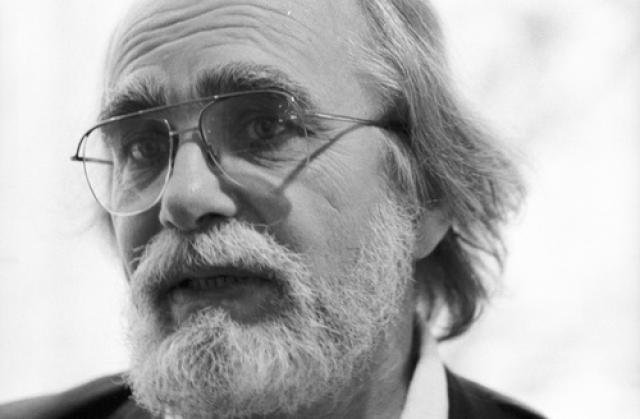
Larry Austin was born on September 12, 1930, in Duncan, Oklahoma. He earned a Bachelor's degree in music in 1951 and a Master's degree in 1952, both from the University of North Texas College of Music. Austin furthered his studies at Mills College in 1955 and pursued his doctorate at the University of California, Berkeley from 1955 to 1958. He studied under Violet Archer at the University of North Texas, Darius Milhaud at Mills College, and Andrew Imbrie in California.
Career and Teaching
From 1958 to 1972, Austin taught at the University of California, Davis, where he rose from an assistant professor to a full professor. During his time there, he founded the 'New Music Ensemble,' dedicated to improvised music. In 1972, Austin accepted a position at the University of South Florida, where he taught until 1978. He then returned to Texas and taught at his alma mater until 1996 when he became an honorary professor. Among his students were notable individuals, including American composers Dary John Mizelle and Rodney Waschka II.
Notable Works
Initially, Larry Austin gained serious recognition for his instrumental and orchestral compositions, such as 'Improvisations for Orchestra and Jazz Soloists,' performed and recorded by the New York Philharmonic under the direction of Leonard Bernstein. Austin's orchestral works also include 'Universe Symphony, as realized and completed by Larry Austin' for a large orchestra and 'Sinfonia Concertante: A Mozartean Episode' for a chamber ensemble. His chamber works are particularly influenced by computer and electroacoustic music, including 'Accidents' for prepared piano, written for David Tudor. Other notable works include 'Canadian Coastlines: Canonic Fractals for Musicians and Computer Band' and 'BluesAx,' which received the 'Magisterium Prize' in Bourges in 1996.
Later Works and Legacy
In his last work, 'John explains...' (2007), designed for octophonic sound, Austin incorporated an interview recording with John Cage. The composition premiered at the North Carolina Computer Music Festival in 2008. Renowned music critic Tom Johnson described Austin's music as follows: "His style is not typical of what is listened to in the suburbs or preferred in business districts. It's not minimalism, electronics, hypnotic, or European music. But it still works, it's highly individual, yet it has something to say in each of these directions. Meanwhile, Charles Ives is undoubtedly the true source of Austin's music, who also loved musical symbolism, enjoyed sound collages, and combined them as much as he could, never overdoing it just for the sake of sound aesthetics."