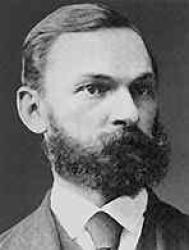
Gottfried Weber
 Germany
- Gottfried Weber: A Pioneer in Music Theory and Criticism
- Self-Taught Theorist
- "Versuch einer geordneten Theorie der Tonsetzkunst"
- Questioning Mozart's "Requiem"
- "Caecilia": A Musical Publication
- Composer and Performer
- Legacy
Gottfried Weber: A Pioneer in Music Theory and Criticism
Early Life and CareerGottfried Weber was born in Mannheim, Germany on March 1, 1779. Initially pursuing a legal career, he rose to a respectable position. However, his passion for music consumed him, leading him to dedicate himself fully to musical pursuits.
Self-Taught Theorist
Weber became a self-taught musician. Studying musical theories, he encountered inconsistencies that sparked skepticism within him. He rejected established theoretical principles, believing that practical analysis of exemplary compositions held the key to mastering the art.
"Versuch einer geordneten Theorie der Tonsetzkunst"
In 1817-1821, Weber published his groundbreaking treatise "Versuch einer geordneten Theorie der Tonsetzkunst zum Selbstunterricht, mit Anmerkungen für Gelehrte" (An Attempt at an Ordered Theory of Music for Self-Instruction, with Annotations for Scholars). This work gained widespread recognition for its originality and insights.
Questioning Mozart's "Requiem"
Weber's skepticism extended to the authenticity of Mozart's renowned "Requiem." He argued that it was composed by Franz Süssmayr based on Mozart's fragmented sketches after Mozart's untimely death. His research on this subject was published in "Ergebnisse der bisherigen Forschungen über die Echtheit des Mozart'schen Requiem" (1826) and "Weitere Ergebnisse der weiteren Forschungen über die Echtheit des Mozart'schen Requiem" (1827).
"Caecilia": A Musical Publication
In 1824, Weber founded "Caecilia, eine Zeitschrift für die musikalische Welt" (Caecilia: A Journal for the Musical World). This publication platform showcased his critical writings and provided a voice for emerging musical ideas.
Composer and Performer
Beyond his theoretical and critical work, Weber also composed music, including masses, secular choruses, songs, and pieces for various instruments. His compositions demonstrated his deep understanding of musical form and expression.
Legacy
Gottfried Weber passed away in Mainz on May 21, 1839. His writings and theories left an enduring legacy in music education, theory, and criticism. His contributions to the field helped shape the understanding and practice of music for generations to come.