László Bíró
- Early Life and Work as a Journalist
- Developing the Ballpoint Pen
- Life in Argentina and Other Inventions
- Legacy
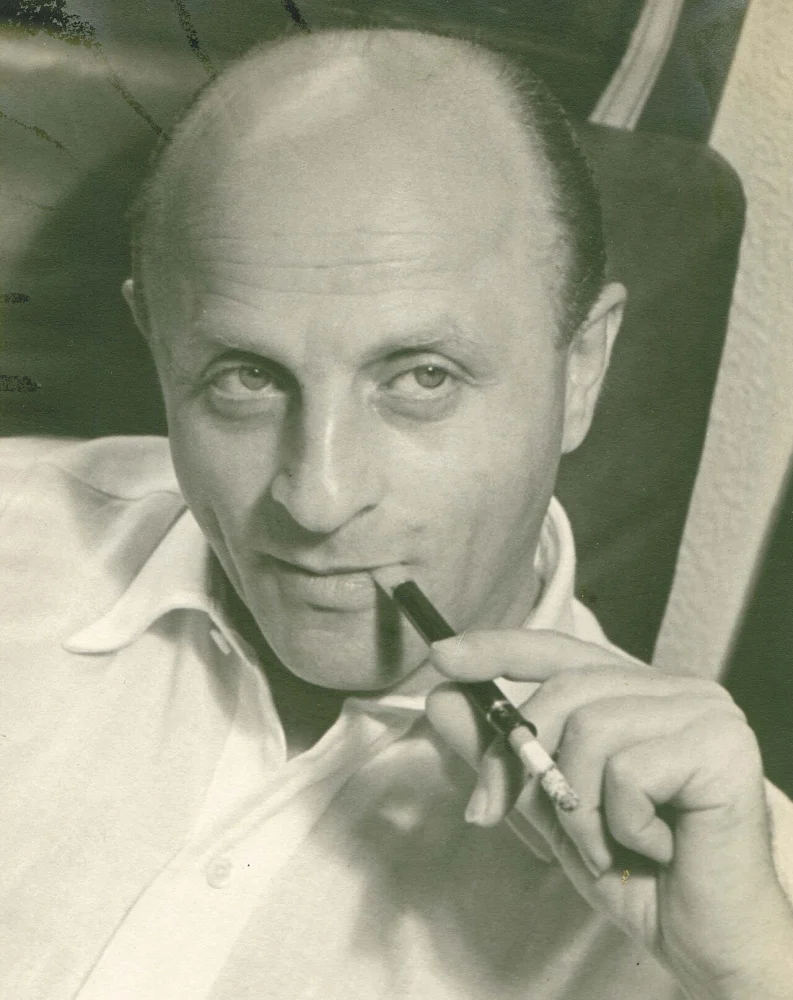
László Bíró helped make writing with a ballpoint practical. A Hungarian journalist and inventor, he developed a pen that used a tiny rotating ball to deliver quick-drying ink without the spills and frequent refills associated with fountain pens. His design became a worldwide everyday object, and in several countries the word “biro” is still used for a ballpoint pen.
Early Life and Work as a Journalist
Bíró was born László József Schweiger in Budapest on September 29, 1899. His family adopted the surname Bíró in 1905. He worked in several fields before becoming known as an inventor, including journalism, painting, and publishing. As a newspaper editor, he paid close attention to the printing process and the way its ink dried rapidly on paper.
The ink used in printing was too thick to flow through a conventional fountain pen. Bíró began exploring a different mechanism: a small ball at the tip would rotate as the pen moved, picking up ink from a reservoir and transferring it to the page. His brother György, a chemist, helped develop an ink with a consistency suitable for the design.
Developing the Ballpoint Pen
Bíró and his collaborators refined the mechanism through the 1930s. In 1938, he obtained patents for versions of the ballpoint pen. Political conditions in Europe were worsening, especially for Jews, and Bíró left Hungary with his family at the end of that year. After moving through France, he settled in Argentina in 1940.
There he continued developing the pen with his brother and business partner Juan Jorge Meyne. An Argentine patent was granted in 1943, and the product was marketed as the “Birome,” a name combining Bíró and Meyne. The design offered a practical alternative to the fountain pen: it was portable, worked with thicker ink, and could write on many surfaces with less mess.
The British government recognized its usefulness for pilots, whose fountain pens could leak at altitude, and placed a large order during the Second World War. Commercial rights and competing versions later carried the ballpoint pen into markets around the world. Bíró’s invention was central to this transformation, though the design continued to be refined and commercial success was shared by manufacturers and licensees.
Life in Argentina and Other Inventions
Bíró became an Argentine citizen and continued working on new ideas. He explored inventions in areas beyond writing instruments, including a synthetic resin he called Birolit. His career reflected a persistent curiosity about how everyday tools could be made simpler and more dependable.
He was not a conventional laboratory scientist. His path from journalism to invention grew from observing ordinary problems and testing practical solutions. The ballpoint pen turned that approach into a globally recognized achievement.
Legacy
Bíró died in Buenos Aires on October 24, 1985. In Argentina, September 29, his birthday, is celebrated as Inventor’s Day. The ballpoint pen he helped perfect remains one of the most widely used writing tools in the world.
His legacy lies in turning a clever mechanism into a dependable everyday instrument. A small ball and carefully formulated ink changed how people took notes, signed documents, and wrote on the move—and gave the inventor’s name a lasting place in common speech.