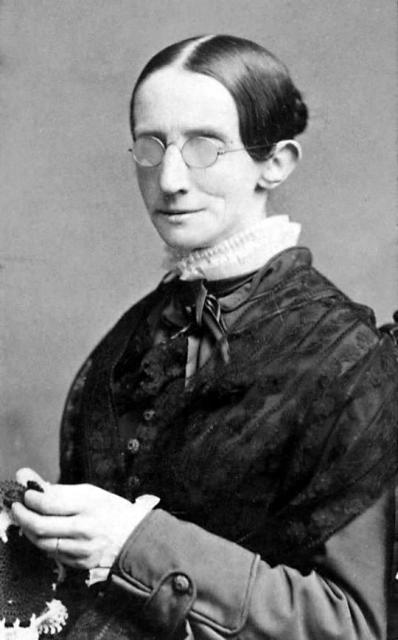
Laura Bridgman
 Germany
- Early Life and Childhood
- Tragedy Strikes
- A Life of Adaptation
- Groundbreaking Experiment
- Education and Communication
- A Dedicated Student
- Socialization and Personal Growth
- Legacy and Impact
- Later Years and Death
Early Life and Childhood
Laura Dewey Lynn Bridgman was born on December 21, 1829, in Hanover, New Hampshire, to a poor Baptist farmer named Daniel Bridgman and his wife, Harmony. As an infant, she was a frail and sickly child, but by the age of two, Laura had developed normally without any apparent disabilities.
Tragedy Strikes
Laura's life took a tragic turn at the age of two when she contracted scarlet fever. The disease claimed the lives of her older siblings, Mary and Charles, and brother, Nelson. Laura survived but was left blind, deaf, and partially deprived of her sense of smell and taste.
A Life of Adaptation
Despite her severe disabilities, Laura lived a remarkably full life. She mastered basic household tasks, learned to knit and sew, and developed gestures to communicate with her family. In 1837, her case was brought to the attention of Dr. Samuel Gridley Howe, head of the Perkins Institution for the Blind in Boston.
Groundbreaking Experiment
Dr. Howe saw Laura as an opportunity to conduct a groundbreaking scientific and educational experiment. He proposed to educate her at the school from an early age, and Laura's parents readily agreed. In October 1837, Laura became a student at the Perkins Institution.
Education and Communication
Through the tireless efforts of her teachers, Laura quickly learned the deaf alphabet, mastered Braille, and gained the ability to communicate with others. She was also taught religion, needlework, and basic life skills.
A Dedicated Student
Laura proved to be an exceptionally dedicated student, overcoming significant challenges. Even mundane tasks such as table manners and hygiene required extensive instruction. Despite her difficulties, she persevered, displaying a strong work ethic.
Socialization and Personal Growth
While Laura excelled academically, her social development presented obstacles. She had limited opportunities for human interaction, which affected her ability to socialize and form relationships.
Legacy and Impact
Laura Bridgman's education was widely publicized and documented. Her teachers published accounts of her progress, which became influential in the development of teaching methods for deaf-blind children. Her experience paved the way for the establishment of schools and organizations dedicated to the education of this population.
Later Years and Death
As an adult, Laura became a skilled poet, and her most famous work was "Holy Home." She remained a resident at the Perkins Institution until her death on May 24, 1889. She was buried in the Dana Cemetery in Hanover, New Hampshire.


