Lazar Bicheharov
 Russia
- Early Life and Military Career
- North Caucasian Uprising and Alliance with Britain
- Intervention in Baku and the Fall of the City
- Cooperation with the White Movement and Emigration
Early Life and Military Career
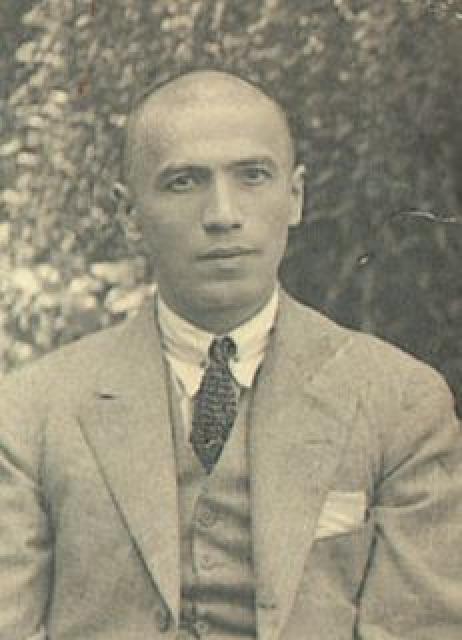
Lazar Fyodorovich Bicherakhov was born in 1882. He graduated from the 1st Real School in St. Petersburg and the Alekseevsky Military School in Moscow.
During World War I, Bicherakhov served in the 1st Gorsko-Mozdok Regiment (1914-1915). He then commanded the Terek Cossack Detachment in the Caucasian Army on the Iranian Front (1915-1918), attaining the rank of Podsauseul.
North Caucasian Uprising and Alliance with Britain
In July 1918, anti-Bolshevik uprisings erupted in the North Caucasus. Bicherakhov's brother, Georgy Fyodorovich Bicherakhov, led a government that emerged from this unrest.
In June 1918, Lazar Bicherakhov withdrew to Enzeli (now Iran) where he negotiated a treaty with British General L. Dunsterville for joint operations in the Caucasus.
Intervention in Baku and the Fall of the City
In July 1918, Bicherakhov landed his detachment at Alat Station near Baku. He initially pledged cooperation with the Baku Soviet and the Azerbaijani Democratic Republic. However, on July 30, 1918, Bicherakhov engaged the approaching Turkish forces, leading to the capture of Derbent and Petrovsk-Port (Makhachkala).
The Baku government appealed for British assistance, which arrived on August 4, 1918. Despite the British presence, Turkish forces captured Baku on August 14, 1918.
Cooperation with the White Movement and Emigration
Bicherakhov established contact with Generals Denikin and Kolchak of the White Army. In September 1918, he returned to Petrovsk-Port with his troops. In November 1918, he re-entered Baku, but the British disbanded his units in 1919.
Bicherakhov joined the West Caspian District forces of General Denikin's Volunteer Army in February 1919. In 1920, he emigrated to Great Britain. He later moved to Germany (1928) and passed away in Ulm in 1952.