Leigh Bowery
 Australia
Leigh Bowery made his own body his most powerful medium. Through towering costumes, painted faces and performances that turned spectators into part of the work, the Australian-born artist challenged ideas about beauty, gender and who gets to command a room. He became a defining presence in London’s experimental nightlife, but his legacy reaches well beyond the club: Bowery helped expand the possibilities of fashion and performance art.
Melbourne beginnings, London reinvention
Born in Sunshine, a suburb of Melbourne, on 26 March 1961, Bowery studied fashion design at the Royal Melbourne Institute of Technology. He wanted to create clothes, but found formal training restrictive. In 1980, he moved to London, drawn to a scene where music, nightlife and fashion were rapidly crossing paths.
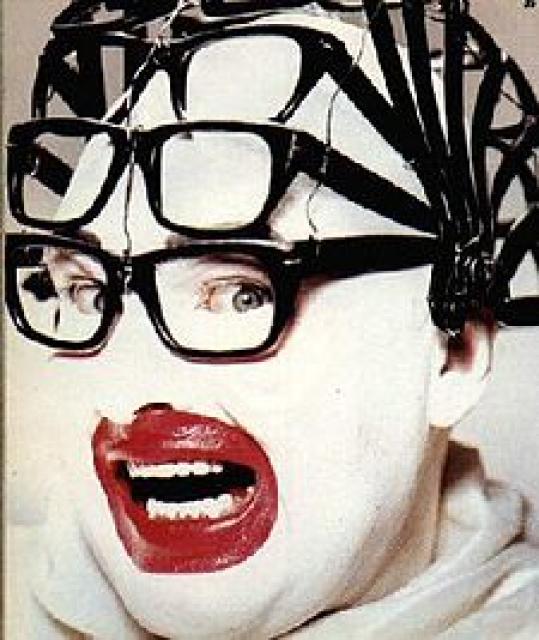
Bowery’s approach to clothing quickly became a kind of visual theater. He built and wore looks that exaggerated the human silhouette with padding, latex, sequins, bold color and elaborate makeup. Each new appearance seemed to invent a different character. He treated dress as a means of transforming the body and unsettling the audience’s expectations, rather than as a route to conventional glamour.
Taboo and the art of being seen
In 1985, Bowery launched Taboo, a club night that became a gathering place for London’s adventurous fashion and queer scenes. The club was known for its anything-goes energy and an expectation that guests should arrive dressed to make an impression. Bowery himself was its most vivid attraction: his costumes turned the act of walking into a performance and made the club floor feel like a living gallery.
His influence spread through creative collaborations. He designed costumes for choreographer Michael Clark’s dance works, a partnership that continued for nearly a decade. In 1988, he staged a five-day performance in a gallery, dressing and posing behind a two-way mirror while visitors watched. The work made the audience’s gaze part of the event, asking who was performing and who was on display.
Bowery also became a compelling subject for painters. Lucian Freud began painting him in the early 1990s, producing portraits that presented his large, unconventional body with the seriousness traditionally reserved for classical nudes. Later, Bowery formed the band Minty, carrying his blend of provocation, humor and spectacle into music and live performance.
An enduring influence
Bowery married Nicola Bateman in 1994. He had learned that he was HIV-positive years earlier but kept the diagnosis private from most people around him. He died in London on 31 December 1994, aged 33, from an AIDS-related illness. His short life left behind a striking record of artistic risk: costumes, photographs, films, collaborations and performances that refused to make his body or identity comfortable for the viewer.
His work continues to be shown and studied in museums, and designers and performers still draw on the radical freedom of his visual language. In 2025, Tate Modern presented a major exhibition bringing together his costumes, films, photography and art-world collaborations. Bowery’s enduring achievement was not simply to shock. He made self-invention into a sustained artistic practice and showed how a single, uncompromising vision could reshape a city’s culture.