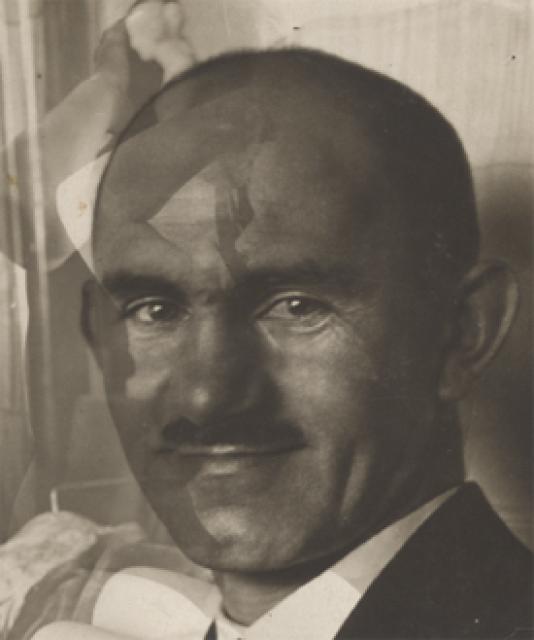
Vytautas Kairiukstis
 Lithuania
Biography of Vladas Kairiukštis
Vladas Kairiukštis was a Lithuanian painter and art historian. He was born into the family of a teacher, Juozas Kairiukštis. His brother, Stasis Kairiukštis, was a teacher in Vilnius and later in Kaunas. Vladas Kairiukštis studied at the Drawing School of I.P. Trutnev in Vilnius from 1910 to 1912. In 1912-1913, he studied at K. F. Yuon's studio in Moscow. He also attended the Faculty of Law at Moscow University from 1913 to 1916.
During the years 1917-1918, Kairiukštis studied at the Moscow School of Painting, Sculpture, and Architecture under Kasatkin. In 1918-1919, he worked as an art instructor in the Department of Public Education in Voronezh. He was mobilized into the Red Army in 1919 and served in the cultural department of the headquarters of the 5th Army in Irkutsk.
From 1920 to 1921, Kairiukštis studied at the Higher Art and Technical Workshops (VKhUTEMAS) under P. V. Kuznetsov. In 1921, he settled in Vilnius and taught art in secondary schools. He organized exhibitions of avant-garde art and participated in the activities of Polish avant-garde groups.
From 1925 to 1929, Kairiukštis traveled to France, Germany, Denmark, and Italy, familiarizing himself with contemporary art movements. From 1923 to 1930, he led a painting studio in Vilnius, where notable students such as Vladas Dremas studied under him. In 1931, Kairiukštis obtained his external degree from Stefan Batory University.
Starting from 1937, he taught in Kaunas. From 1940 to 1944, he worked at the M.K. Čiurlionis Museum in Kaunas. Later, he taught at the Kaunas Institute of Decorative and Applied Arts from 1944 to 1951. After retiring, he moved to Vilnius in 1952. Kairiukštis passed away and was buried at the Bernardine Cemetery in Vilnius.
Kairiukštis was known for his figurative compositions, portraits, landscapes, and still lifes, primarily using oil and pastel. His early works showed influences of Cubism and Constructivism, while his landscapes were influenced by Impressionism. He also created several Suprematist and abstract compositions. He also worked in applied graphics. His exhibitions were held in Vilnius (1931, 1944, 1945), Kaunas (1932, 1935, 1936, 1938, 1939, 1940, 1944, 1945), Riga, and Tallinn (1937).
In addition to his artistic work, Kairiukštis wrote a monograph on Lithuanian watercolorist Kęstutis Sklerius (1938), several works on Čiurlionis, and several articles on art theory. In 1970, a solo exhibition of his works was held in Vilnius.



