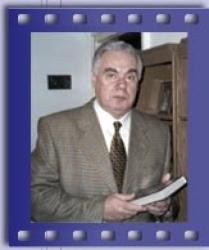
Len Deighton
 Great Britain
- Early Life and Influences on His Career
- Service and Artistic Pursuits
- Literary Success with Spy Novels and Beyond
- Social Commentary and Class Divide
- Literary Focus and Worldwide Residence
Early Life and Influences on His Career
John Anthony Burgess Wilmot, also known as Len Deighton, was born in London in 1929 to a chauffeur father and a cook mother. His childhood home's proximity to Baker Street and the witnessing of a German agent's arrest at the age of 11 may have sparked his interest in espionage fiction.
Service and Artistic Pursuits
After working as a railway clerk, Deighton was drafted into the Royal Air Force, where he served as a photographer in the Special Reconnaissance Unit. Upon his demobilization in 1949, he studied at the St. Martin's School of Art and later at the Royal College of Art. He held various jobs during this time, including as a steward for BOAC, a designer in New York, and an art director at a London advertising agency.
Literary Success with Spy Novels and Beyond
Deighton's literary career soared with the publication of his first novel, "The Ipcress File," in 1962, coinciding with the release of the first James Bond film adaptation. Deighton's protagonist, a middle-ranking secret agent amidst the Cold War, stood in stark contrast to Fleming's glamorous and superhuman hero.
Deighton's spy novels explored the complexities of double, triple, and even quadruple agents, whose loyalties remained elusive even to themselves. In his renowned novel, "Funeral in Berlin," he crafted an absurd plot reminiscent of Kafka and Hasek, juxtaposing the absurdity with chess game references.
Social Commentary and Class Divide
Deighton's portrayal of secret intelligence delved into the class divides of British society, where educational background determined one's status as either an Etonian or an "outside." This stratification manifested in his novels through the distinction between field agents and deskmen.
Literary Focus and Worldwide Residence
After the success of "The Ipcress File," Deighton dedicated himself entirely to writing. He authored two cookbooks and several books on World War II history. In 1969, he left England, settling briefly in Blackrock, Ireland, before spending most of his time with his wife, Isabel, in their homes in Portugal and Guernsey.