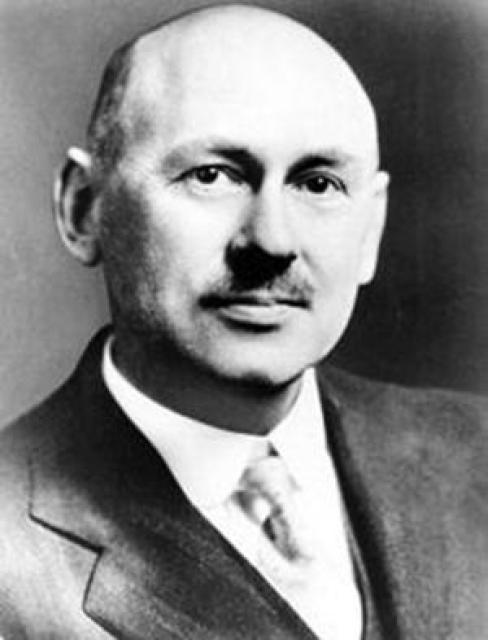
Leo Gerstenzang
 USA
USABiography of Leo Gerstenzang
Leo Gerstenzang, the inventor of cotton swabs, known worldwide as Q-Tips, was born in 1892 in Warsaw, Poland. In 1912, he immigrated to America and settled in Chicago, Illinois. Leo frequently traveled to Europe as a representative of the organization 'American Jewish Joint Distribution Committee', and he obtained American citizenship in 1919. In 1921, he moved to New York City and later founded his own company, named 'Leo Gerstenzang Infant Novelty Company'. It was this company that manufactured cotton swabs, which made Leo Gerstenzang's name forever part of the history of human inventions.

The Invention of Q-Tips
There are several versions of how Leo Gerstenzang came up with the idea of creating cotton swabs. One of the versions states that in 1923, Leo was displeased to see his wife cleaning their baby's ears with a makeshift tool made of cotton and toothpicks. He believed it was inadequate, and soon after, special cotton swabs were introduced to the market, initially named 'Baby Gays'. In 1926, Leo changed the name of his product to 'Q-Tips Baby Gays', with the letter 'Q' representing 'quality'. Over time, the second part of the name was removed, and cotton swabs for ears became known as Q-Tips worldwide. Gerstenzang's company later became known as 'Q-tips®, Inc.'.
Later Life and Legacy
Demand for cotton swabs continued to grow in the 1950s, and their uses expanded. Additionally, the company began producing disposable tissues, which also became incredibly popular. Leo Gerstenzang's company was later sold, and unfortunately, little is known about his life today. However, it is thanks to him that such a simple yet essential personal hygiene item as cotton swabs is associated with his name. Leo Gerstenzang passed away in October 1973, but the exact date of his death and any further details of his life remain unknown.
What is known is that he made charitable donations to educational projects, and one of the buildings at Brandeis University is named in his honor.