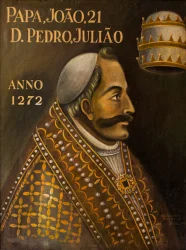
Leo II
Leo II was bishop of Rome from 682 to 683. His papacy came after a long delay in the confirmation of his election, as the Byzantine emperor waited for the conclusion of the Third Council of Constantinople. Leo’s most important act was to ratify the council’s rejection of Monothelitism, a doctrine that held that Christ had a single will, and to clarify why the council had also condemned his predecessor, Honorius I.
Election and Background
Leo was born in Sicily, though little is known about his early life. He was elected after the death of Pope Agatho in 681, but was not consecrated until August 682. Emperor Constantine IV had required papal elections to receive imperial confirmation, and he waited for the council’s proceedings and documents to be settled before approving the new pope.
The delay placed Leo at the center of a major theological and political moment. The council had affirmed that Christ possessed both a divine and human will, in keeping with the church’s teaching about his two natures. Its decision was to be accepted across the empire, and Leo worked to circulate it in the West.
The Council and Honorius
Leo confirmed the council’s decrees and arranged for its Greek acts to be translated into Latin. He sent letters to the emperor, bishops and rulers in the West explaining the decision. The council had also condemned Pope Honorius I, who had corresponded with the patriarch Sergius of Constantinople during the earlier controversy.
Leo clarified that Honorius was condemned not as a formal teacher of heresy, but for failing to oppose the doctrine strongly enough. He argued that the previous pope had allowed the error to spread through negligence. This distinction was important to Leo’s defense of the Roman church’s orthodoxy while accepting the council’s judgment.
Church and Legacy
Leo’s pontificate was brief, but he is also remembered for restoring and decorating churches in Rome and for his care for the city’s liturgical life. He died on 3 July 683 and was later honored as a saint.
His role in confirming the council helped bring a major theological dispute to a close in the West. The episode also shows how the seventh-century papacy worked within a world where imperial approval, church councils and local religious leadership remained closely intertwined.