Leon Fleisher
 USA
USA- Biography of Leon Fleisher
- Early Career and Mentors
- Recording Career
- Challenges and Triumphs
- Later Career and Recognition
Biography of Leon Fleisher
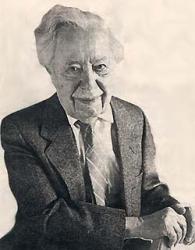
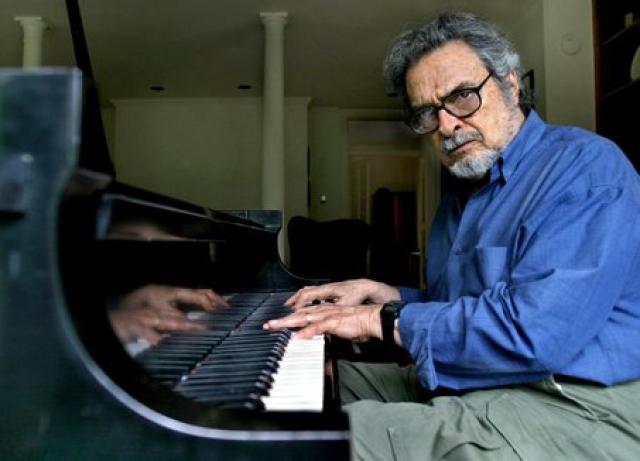
Leon Fleisher was an American pianist and conductor, as well as a laureate of numerous competitions and professional awards. He was born on July 23, 1928, in San Francisco, California, and began learning to play the piano at the age of four.
Early Career and Mentors
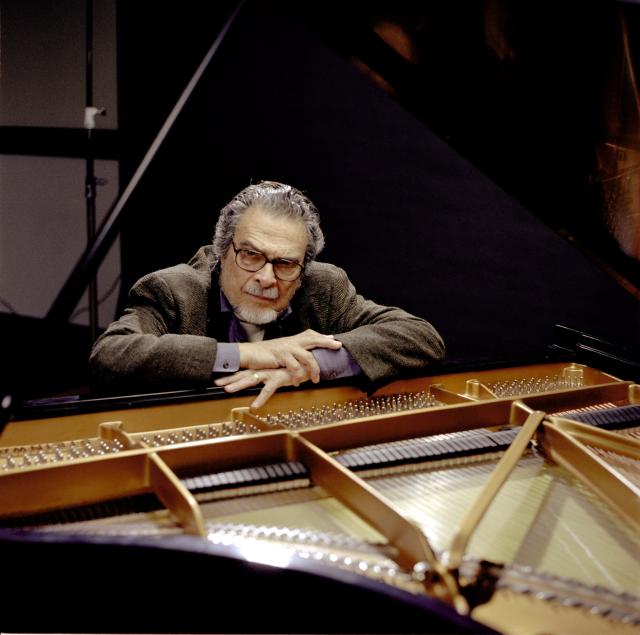
At the age of eight, Fleisher made his debut performance accompanied by the New York Philharmonic under the baton of Pierre Monteux. Monteux enthusiastically referred to him as the "discovery of the century." Fleisher was fortunate to be taught by the legendary Austrian pianist, composer, and educator Artur Schnabel, one of the greatest performers of the 20th century.
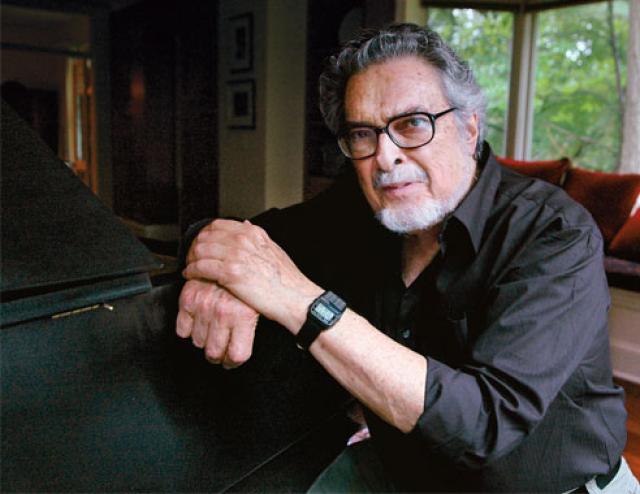
In addition, he studied under the renowned Italian pianist Maria Curcio, who was also a famous pedagogue. Interestingly, Artur Schnabel was a student of the Polish pianist and educator Teodor Leszetycki, who, in turn, studied under the Austrian pianist and composer Carl Czerny. Czerny's etudes are well-known to children in music schools worldwide, and Czerny himself was taught by Ludwig van Beethoven.
Recording Career
In the 1950s, Fleisher signed an exclusive contract with the recording company "Columbia Masterworks." He became particularly known for his interpretations of Brahms and Beethoven's piano concertos, which he recorded with the Cleveland Orchestra under the direction of George Szell. They also recorded Mozart's Piano Concerto No. 25, Grieg's and Schumann's piano concertos, César Franck's Symphonic Variations, and Rachmaninoff's Rhapsody on a Theme of Paganini.
Challenges and Triumphs
Unfortunately, in the 1960s, Fleisher was diagnosed with focal dystonia, a condition that almost caused him to lose the ability to use his right hand. However, he continued to perform and record repertoire for the left hand while science sought a solution to his condition.
Fleisher also ventured into conducting and served as the musical director of the Annapolis Symphony Orchestra in Maryland for a period of time. It was only in the early 21st century, thanks to Botox injections and a therapeutic method called Rolfing, that he regained the use of his right hand.
Later Career and Recognition
In 2004, Fleisher released his first recording since the 1960s, titled "Two Hands," which received excellent reviews from critics. It was accompanied by a short documentary film of the same name directed by Nathaniel Kahn, which was nominated for an Academy Award in 2007.
In the same year, Fleisher was honored with the Kennedy Center Honors for his outstanding career and the life-affirming power of his artistry. His musical interests extended beyond the German romantic repertoire. American composer William Bolcom wrote the Concerto for Two Pianos, Left Hand specifically for Fleisher and his close friend, pianist Gary Graffman, who also suffered from a similar problem.
Fleisher continued to conduct and teach at institutions such as the Peabody Conservatory of Music, Curtis Institute of Music, and the Royal Conservatory of Music in Toronto. Many exceptional pianists have been his students. In November 2010, his memoir, "My Nine Lives," was published.