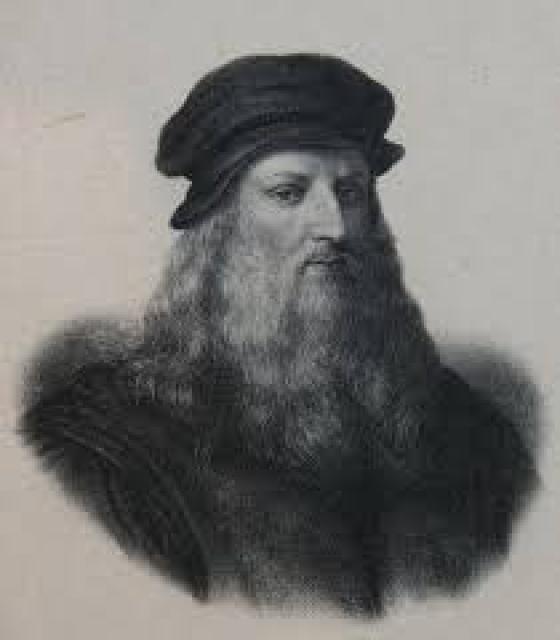
Leonardo da Vinci
 France
- Biography of Leonardo da Vinci
- Early Period of Artistic Career
- Mature Period of Artistic Career
- Military Architecture and Public Work
- The Last Supper
- Mona Lisa
Biography of Leonardo da Vinci
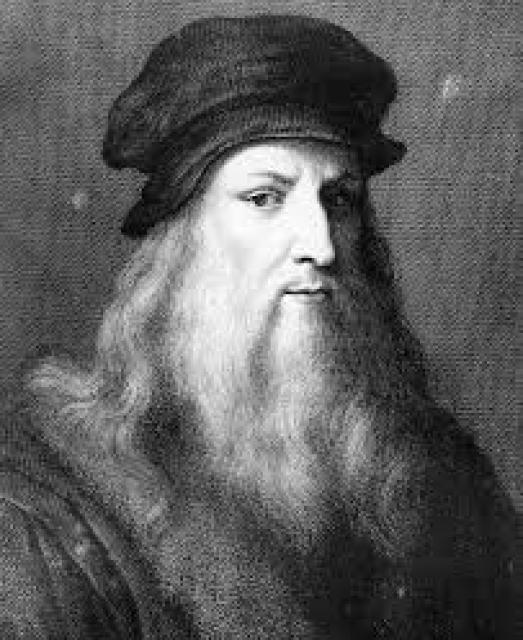
Leonardo da Vinci was an artist, inventor, engineer, and anatomist of the Renaissance period. For Leonardo, art and scientific inquiry were complementary aspects of his constant pursuit to observe and document the external appearance and internal structure of the world. It can definitely be said that he was the first among scholars whose research was complemented by artistic pursuits.
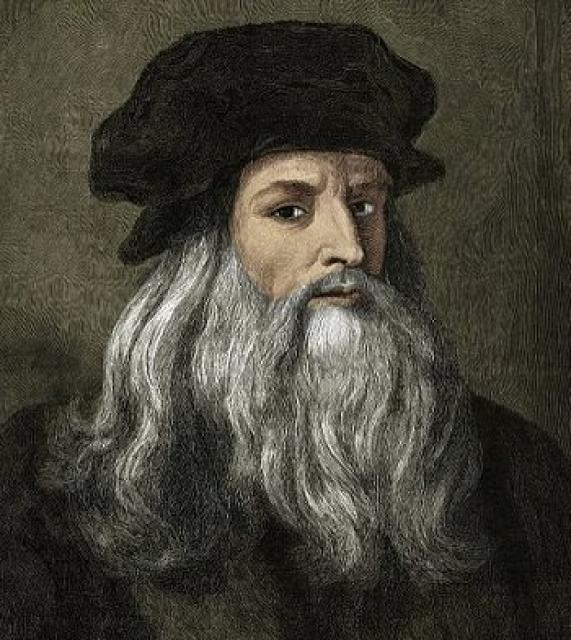
Leonardo was born in the town of Vinci (or near it), west of Florence, on April 15, 1452. He was the illegitimate son of a Florentine notary and a peasant girl. He was raised in his father's house and, being the son of an educated man, received a thorough basic education in reading, writing, and arithmetic. It is possible that in 1467, at the age of 15, Leonardo was apprenticed to one of the leading masters of the early Renaissance in Florence, Andrea del Verrocchio. In 1472, Leonardo joined the guild of painters, studying the fundamentals of drawing and other necessary disciplines. In 1476, he was still working in Verrocchio's workshop, apparently in collaboration with the master himself. By 1480, Leonardo was already receiving major commissions, but in 1482, he moved to Milan.
In a letter to the ruler of Milan, Ludovico Sforza, Leonardo introduced himself as an engineer, military expert, and artist. The years spent in Milan were filled with various activities. Leonardo painted several pictures, including the famous fresco, The Last Supper, and began diligently and seriously keeping his notes. The Leonardo we know from his notes is an architect-designer (creator of innovative plans that were never realized), anatomist, hydraulics expert, inventor of mechanisms, creator of decorations for court performances, composer of puzzles, rebuses, and fables for court entertainment, musician, and theorist of painting.
After the expulsion of Ludovico Sforza from Milan by the French in 1499, Leonardo traveled to Venice, visiting Mantua on the way, where he participated in the construction of fortifications, and then returned to Florence. It is reported that he was so absorbed in mathematics that he did not want to pick up a paintbrush. For twelve years, Leonardo constantly moved from city to city, working for the famous Cesare Borgia in Romagna, designing defensive structures (which were never built) for Piombino. In Florence, he competed with Michelangelo, and the culmination of this rivalry was the creation of huge battle compositions that the two artists painted for the Palazzo della Signoria (also known as Palazzo Vecchio). Then Leonardo conceived a second equestrian monument, which, like the first, was never created. Throughout these years, he continued to fill his notebooks with diverse ideas on such varied subjects as the theory and practice of painting, anatomy, mathematics, and the flight of birds. But in 1513, as in 1499, his patrons were expelled from Milan. Leonardo left for Rome, where he spent three years under the patronage of the Medici family. Oppressed and disappointed by the lack of material for anatomical studies, Leonardo busied himself with experiments and ideas that led to nothing. The French, first Louis XII and then Francis I, admired the works of the Italian Renaissance, especially Leonardo's The Last Supper. Therefore, it is not surprising that in 1516, Francis I, well-informed about Leonardo's various talents, invited him to his court, which was then located at Château d'Amboise in the Loire Valley. Despite working on hydraulic projects and planning a new royal palace, according to the writings of the sculptor Benvenuto Cellini, his main occupation was an honorary position as a court sage and advisor. Leonardo died in Amboise on May 2, 1519. By that time, his paintings were scattered mainly in private collections, and his notes lay in various collections, almost forgotten for several centuries.
Early Period of Artistic Career
Leonardo's first dated work (1473, Uffizi) is a small sketch of a valley seen from a gorge. On one side is a castle, on the other is a wooded slope. This sketch, made with quick pen strokes, testifies to the artist's constant interest in atmospheric phenomena, which he later wrote about extensively in his notes. The landscape, depicted from a high viewpoint overlooking the river valley, was a common technique in Florentine art of the 1460s (although it was always a background to the paintings). The silver pencil drawing of an ancient warrior in profile (mid-1470s, British Museum) demonstrates Leonardo's full maturity as a draftsman. It skillfully combines weak, languid lines with tense, elastic lines and attention to gradually modeled light and shadow on the surfaces, creating a lively, vibrant depiction.
The undated painting Annunciation (mid-1470s, Uffizi) was attributed to Leonardo only in the 19th century. It is possible that it is more correct to consider it a result of collaboration between Leonardo and Verrocchio. There are several weak points in the painting, such as the too abrupt perspective foreshortening of the building on the left or the poorly developed perspective scale of the figure of the Virgin and the lectern. However, in the delicate and soft modeling, as well as in the interpretation of the misty landscape with a vaguely outlined mountain in the background, the painting belongs to the hand of Leonardo, as can be concluded from studying his later works. The question of whether he was responsible for the compositional concept remains open. The subdued colors, compared to works by his contemporaries, anticipate the color scheme of the artist's later works. Verrocchio's Baptism of Christ (Uffizi) is also undated, although it can be tentatively placed in the first half of the 1470s. Giorgio Vasari, one of Leonardo's first biographers, claims that he painted the figure of the angel on the left turned in profile. The angel's head is delicately modeled with light and shadow, with a soft and careful depiction of the surface texture, which differs from the more linear treatment of the angel on the right. It seems that Leonardo's participation in this painting extended to the misty landscape with the depiction of a river and some parts of the figure of Christ, which are painted in oil, although tempera was used in other parts of the painting. This difference in technique suggests that Leonardo probably completed the unfinished painting of Verrocchio. It is unlikely that the two artists worked on it simultaneously.
The portrait of Ginevra de' Benci (around 1478, Washington, National Gallery) may be Leonardo's first painting done independently. The panel has been cut about 20 cm at the bottom, so the crossed hands of the young woman disappeared (this is known from a comparison with the surviving copies of this painting). In this portrait, Leonardo does not seek to delve into the inner world of the model. However, as a demonstration of his skillful mastery of soft, almost monochromatic chiaroscuro modeling, the painting is unparalleled. The branches of the juniper tree (in Italian, ginevra) and the misty landscape are visible in the background. The portrait of Ginevra de' Benci and Madonna Benois (St. Petersburg, Hermitage), which was preceded by a series of tiny sketches of Madonna and Child, are likely the last paintings completed in Florence. The unfinished St. Jerome, very close in style to The Adoration of the Magi, can also be dated to around 1480. These paintings are contemporary with the earliest surviving sketches of war machinery. Educated as an artist but aspiring to be a military engineer, Leonardo abandoned work on The Adoration of the Magi and set out in search of new challenges and a new life in Milan.
Mature Period of Artistic Career
Although Leonardo went to Milan in hopes of a career as an engineer, his first commission, which he received in 1483, was to create part of an altarpiece for the Chapel of the Immaculate Conception - Madonna in the Grotto (Louvre; attribution to Leonardo of a later version from the National Gallery in London is disputed). The kneeling Mary looks at the Infant Christ and the little John the Baptist, while the angel pointing at John looks at the viewer. The figures are arranged in a triangle on the foreground. The figures seem to be separated from the viewer by a light haze, called sfumato (blurred and indefinite contours, soft shadows), which from now on became a characteristic feature of Leonardo's painting. Behind them, in the semi-darkness of the grotto, stalactites and stalagmites are visible, and the slowly flowing waters are covered with mist. The landscape seems fantastical, but it should be remembered that Leonardo claimed that painting was a science. As can be seen from the sketches contemporary with the painting, he relied on careful observations of geological phenomena. This also applies to the depiction of plants: not only can they be identified as a specific species, but one can also see that Leonardo knew about the property of plants to turn towards the sun.
In the mid-1480s, Leonardo painted The Virgin and Child with Saint Anne, and around 1504, he began working on his famous painting, the Mona Lisa, a portrait of the wife of a Florentine merchant. This portrait (located in the Louvre) is a further development of the type that Leonardo had created earlier: the model is depicted from the waist up, in a slight turn, with her face facing the viewer, and folded hands framing the composition from below.
The spiritual hands of the Mona Lisa are as beautiful as the slight smile on her face and the primitive rocky landscape in the misty distance. The Mona Lisa is known as the representation of a mysterious, even fatal woman, but this interpretation belongs to the 19th century. It is more likely that for Leonardo, this painting was the most complex and successful exercise in the use of sfumato, and the background of the painting was the result of his research in the field of geology. Regardless of whether the subject was secular or religious, the landscape, revealing the "bones of the earth," constantly appears in Leonardo's work.
The Mona Lisa was created at a time when Leonardo was so absorbed in studying the structure of the female body, anatomy, and issues related to childbirth that it is almost impossible to separate his artistic and scientific interests. During these years, he sketched a human embryo in the womb and created the last of several versions of the painting Leda, based on the ancient myth of the birth of Castor and Pollux from the union of mortal girl Leda and Zeus, who took on the form of a swan. Leonardo engaged in comparative anatomy and was interested in analogies between all organic forms.
Military Architecture and Public Work
Of all the sciences, Leonardo was most interested in anatomy and military affairs. He created projects for defensive structures for almost all of his patrons, as they were essential because the improvement of cannons in the late 15th century rendered old-style vertical walls obsolete. To protect against cannons, walls with an inclination, earth mounds, and various devices that allowed for successful crossfire defense were required. Leonardo created numerous projects, including an innovative fortress project with low, concentrically arranged circles of tunnels with embrasures. Like almost all of his projects in this area, it was not implemented.
The Last Supper
Leonardo's thoughts on space, linear perspective, and the expression of various emotions in painting culminated in the creation of the fresco The Last Supper, painted in an experimental technique on the far end wall of the refectory of the monastery of Santa Maria delle Grazie in Milan between 1495 and 1497. Using illusionistic means, Leonardo expanded the real space of the hall into the realm of painted space, with a high table at which Christ and the apostles are seated. He depicted the moment when Christ said, "Truly I tell you, one of you will betray me," as a psychological explosion. Christ is the center of the composition, around which a storm of emotions gathers. All means are used to bring the eye to the figure of Christ: the main colors of the clothes (red and blue), the silhouette standing out against the window. The figure of Judas (fourth from the right of Christ) is moved from its usual place on the outside of the table, and his depiction together with the other apostles further intensifies the drama of what is happening. The twelve apostles are divided into four groups of three and are depicted leaning towards or recoiling from Christ. As the arrangement of thirteen people on one side of the table is somewhat unnatural, their direct juxtaposition creates emotional tension, and the receding perspective (the room is depicted as a trapezoid) creates the effect of figures being pushed out towards the viewer. Perhaps, drawing inspiration from his friend Luca Pacioli (ca. 1445-1517), for whose book On Divine Proportion (1509) Leonardo made several illustrations, he arranged the composition of the fresco according to a system of proportions similar to the proportions of musical intervals; this idea later became the basis for the work of the architect Andrea Palladio.
Mona Lisa
Leonardo's activity in the first decade of the 16th century was as varied as in other periods of his life. Despite his fascination with mathematics, he continued to work on painting. During this time, he created the painting Madonna of the Yarnwinder, and around 1504, Leonardo began work on his famous painting, the Mona Lisa, a portrait of the wife of a Florentine merchant. This portrait (located in the Louvre) is a further development of the type that Leonardo had created earlier: the model is depicted from the waist up, in a slight turn, with her face facing the viewer, and folded hands framing the composition from below.
The spiritual hands of the Mona Lisa are as beautiful as the slight smile on her face and the primitive rocky landscape in the misty distance. The Mona Lisa is known as the representation of a mysterious, even fatal woman, but this interpretation belongs to the 19th century. It is more likely that for Leonardo, this painting was the most complex and successful exercise in the use of sfumato, and the background of the painting was the result of his research in the field of geology. Regardless of whether the subject was secular or religious, the landscape, revealing the "bones of the earth," constantly appears in Leonardo's work.
During this time, Leonardo sketched a human embryo in the womb and created the last of several versions of the painting Leda, based on the ancient myth of the birth of Castor and Pollux from the union of mortal girl Leda and Zeus, who took on the form of a swan. Leonardo engaged in comparative anatomy and was interested in analogies between all organic forms.