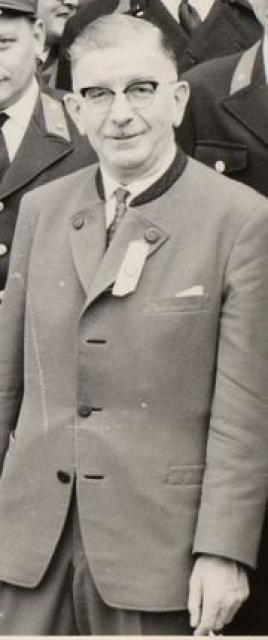
Leopold Figl
 Austria
- Leopold Figl: Biography of an Austrian Politician
- Early Life and Political Career
- World War II and Imprisonment
- Post-War Activities
- Chancellorship and Later Career
Leopold Figl: Biography of an Austrian Politician
Leopold Figl was an Austrian politician and a member of the Austrian People's Party (ANP). He served as the Federal Chancellor of Austria from 1945 to 1953.
Early Life and Political Career
Figl became involved in politics in 1931 when he became the Vice Chairman of the Farmers' League of Lower Austria. In 1933, he became the Chairman of the Farmers' League. During the regime of Dollfuss, he joined the Federal Council for Economic Policy.
World War II and Imprisonment
After the annexation of Austria, Figl was arrested and sent to the Dachau concentration camp. He was released in May 1943 and worked as a petroleum engineer. However, in October 1944, he was arrested again and sent to Mauthausen. In February 1945, he was sentenced to death for "treason against the state." He was later liberated by Soviet forces in the same year.
Post-War Activities
After his release, Figl played a crucial role in organizing the food supply for the people of Vienna. On April 14, 1945, he reestablished the Farmers' League, and on April 17, he became its Vice Chairman. He also became the Acting Prime Minister of Lower Austria and Vice Chancellor on April 27.
Chancellorship and Later Career
Following the parliamentary elections in December 1945, where the ANP emerged victorious, Figl formed a grand coalition with the Social Democratic Party (SPA) and became the Chancellor. He remained in this position until November 26, 1953, when he stepped down and became the Minister of Foreign Affairs under Julius Raab's government. As the Minister of Foreign Affairs, Figl signed the Declaration of Independence of Austria.
In 1959, after parliamentary elections that increased the representation of socialists, Figl was succeeded by Bruno Kreisky as the Minister of Foreign Affairs. Figl was elected as the President of the Parliament (National Council) and later became the Prime Minister of Lower Austria in 1962. He held this position until January 1965.
Leopold Figl made significant contributions to Austrian politics and played a crucial role in the country's post-war reconstruction. Through his leadership and dedication, he sought to rebuild the nation and establish its independence on the international stage.


