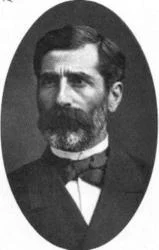
Leopold von Ranke
Leopold von Ranke reshaped how historians approached the past. A German scholar who insisted on close reading of original documents, he helped establish history as a professional academic discipline and trained generations of researchers to test evidence rather than simply repeat inherited stories. His famous aim, often rendered as describing the past “as it really happened,” became a touchstone for modern historiography—even as later scholars questioned whether any historian can achieve complete objectivity.
From schoolteacher to historian
Ranke was born on December 21, 1795, in Wiehe, a town in Thuringia, then part of the Electorate of Saxony. Raised in a Lutheran family, he studied theology and classical philology at the University of Leipzig. After completing his studies, he became a teacher of ancient languages and history at a school in Frankfurt an der Oder.
Preparing lessons led Ranke to study historical texts closely. In 1824 he published his first major work, Stories of the Romance and Germanic Peoples from 1494 to 1535. In its preface, he explained that he did not seek to judge the past or instruct the future, but to show “how it really was.” The phrase was more modest than it later came to sound: Ranke wanted to base history on close examination of records and to understand each period in its own context.
The archive as a workshop
The book helped secure Ranke a position at the University of Berlin, where he began teaching in 1825 and became a full professor in 1834. From 1827 to 1831, he traveled through Vienna and Italy, consulting state papers, diplomatic dispatches and other archival sources. He used these materials to write histories of European rulers and states, including The History of the Popes, published in three volumes from 1834 to 1836.
Ranke’s research and classroom teaching helped shape the emerging discipline of history. He encouraged students to compare accounts, evaluate the origins of documents and draw conclusions from evidence. The seminar model associated with his Berlin teaching spread internationally as universities built professional history departments. He also edited the Historisch-Politische Zeitschrift, a journal that examined current political questions through historical perspective.
His work was broad and prolific. He wrote on the Reformation, Prussian history, France, England, Serbia and the Ottoman Empire, and in old age began a sweeping world history that remained unfinished. He was appointed historiographer of the Prussian state in 1841 and was ennobled in 1865, acquiring the “von” in his name.
Influence and debate
Ranke is frequently called a founder of modern source-based history, but his ideal of impartiality has long been debated. His own historical writing emphasized states, diplomacy and political leaders, and his belief in scholarly detachment did not remove his religious and political assumptions. Later historians have also noted that documents do not speak for themselves: researchers choose what to preserve, compare and interpret.
Still, Ranke’s insistence on evidence and criticism changed the profession. Rather than treating history chiefly as moral instruction or a continuous story of progress, he argued that historians should reconstruct the particular conditions of each period. His methods became a starting point for historical research, even for scholars who challenged his confidence in objectivity.
In 1843 he married Clarissa Graves, an Irish writer and translator, and their family life connected his Berlin household with English and Irish literary circles. Ranke continued writing and teaching into old age, supported in his final years by assistants as his eyesight weakened. He died in Berlin on May 23, 1886, aged 90.
Ranke’s legacy endures in the historian’s everyday work: going to the sources, checking their reliability and making claims that the evidence can sustain. His signature phrase may have been simplified into a promise of perfect neutrality, but his lasting contribution was a disciplined way of asking what the records can—and cannot—tell us about the past.