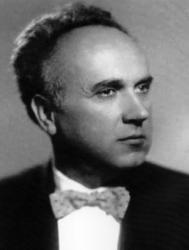
Lev Aronov
- Early Life and Education
- Artistic Debut and Affiliations
- Wartime and Postwar Activities
- Artistic Style and Influences
- Personal Life and Legacy
Early Life and Education
Lev Ilyich Aronov was born in 1909 in Gomel, Russia, to a railway worker. From 1925 to 1930, he studied painting at the Leningrad School of Fine Arts, under the guidance of renowned artists such as Arkady Rylov and Pavel Bobyov.
Artistic Debut and Affiliations
In 1933, Aronov joined the Moscow Union of Artists (MOSH). His work was first exhibited at the "Exhibition of Young Beginning Artists" in 1934, marking the start of his active participation in Moscow's art scene. In the late 1930s, he became a member of the "Group of Five" artistic association, alongside fellow artists Lev Zevin and Mikhail Dobroserdov.
Wartime and Postwar Activities
During World War II, Aronov briefly served in the militia but was later discharged due to health reasons. From 1941 to 1945, he taught at the Moscow Art School in memory of 1905. Concurrently, he contributed to the TASS wartime posters.
In 1958, Aronov began focusing on linocuts. He also served on the Artistic Council at the Painting Production Combine from 1957 to 1964. Additionally, he actively participated in the preservation efforts of the Society for the Protection of Historical and Cultural Monuments from 1957 to 1972.
Artistic Style and Influences
Despite facing political pressure for avoiding propaganda subjects, Aronov remained a realist. His work drew inspiration from various art movements, including Impressionism and Futurism. He primarily created genre paintings, landscapes, portraits, and still lifes, often exploring themes of nature, humanity, and cultural diversity.
Personal Life and Legacy
Aronov was closely connected to other notable artists such as Nikolai Romadin and Vladimir Baksheev. He passed away in Moscow in 1972, leaving behind a significant artistic legacy that reflected his sincerity, compassion, and emotional openness.