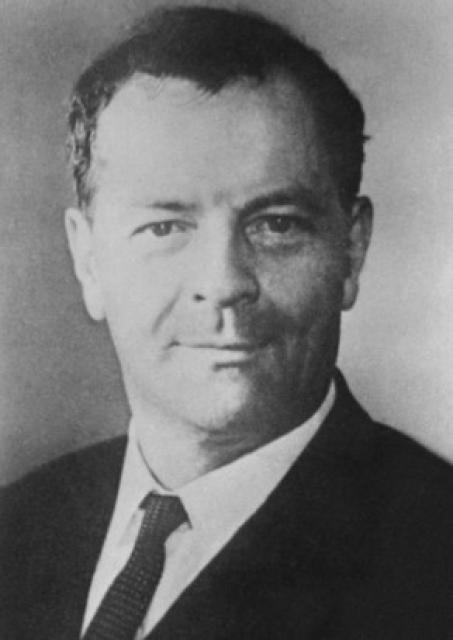
Lev Artsimovich
- Lev Andreevich Artsimovich: A Pioneer in Physics
- Research in Radiation and Nuclear Physics
- Groundbreaking Experiments on Energy and Momentum Conservation
- Contributions to Applied Physics
- Pioneering Research in Thermonuclear Fusion
- Recognition and Honors
- Legacy and Influence
Lev Andreevich Artsimovich: A Pioneer in Physics
Early Life and EducationLev Andreevich Artsimovich was born on February 12 (25), 1909, in Moscow. During his early years, he lived in various cities before returning to Gomel with his family. In 1924, Artsimovich enrolled in the Physics and Mathematics Faculty of Minsk University, graduating in 1928. Driven by a thirst for knowledge, he spent the following year studying in various scientific libraries in Moscow.
Research in Radiation and Nuclear Physics
In 1929, Artsimovich graduated with a thesis on "Theory of Characteristic X-Ray Spectra" from Minsk University. He subsequently relocated to Leningrad and joined the Leningrad Physico-Technical Institute in 1930. There, he collaborated with A.A. Alikhanov on studying X-rays, particularly their reflection from thin metal layers at small angles.
In 1933, Artsimovich was appointed head of a laboratory dedicated to developing impulse generators and amplifier tubes for studying fast electrons and their interactions with nuclei. His research focused on electron scattering and braking processes and the properties of fast neutrons. His groundbreaking work in this field confirmed the predictions of quantum mechanics.
Groundbreaking Experiments on Energy and Momentum Conservation
During this period, Artsimovich also conducted experiments with A.I. Alikhanyan that demonstrated the applicability of the law of energy and momentum conservation in elementary processes. Their work shattered the misconception that this fundamental law was violated in Compton scattering.
Contributions to Applied Physics
During World War II, Artsimovich played a vital role in developing electro-optical systems for night vision using infrared radiation. Post-war, he developed an electromagnetic method for isotope separation.
Pioneering Research in Thermonuclear Fusion
In 1950, Artsimovich assumed leadership of the Soviet Union's experimental research program on controlled thermonuclear synthesis. He made groundbreaking contributions to this field, including the discovery of neutron radiation in high-temperature plasma. Under his guidance, the "Tokamak" thermonuclear installations yielded significant results, leading to the achievement of a stable, quasi-stationary plasma.
Recognition and Honors
For his exceptional contributions to plasma physics, Artsimovich received the State Prize of the USSR in 1971. He was elected to the USSR Academy of Sciences in 1953 and became a member of its presidium in 1957. In 1966, he was elected to the American Academy of Arts and Sciences.
Legacy and Influence
Artsimovich passed away in Moscow on March 1, 1973. His pioneering work in radiation and nuclear physics, energy conservation, and thermonuclear fusion has had a lasting impact on scientific advancements. His legacy continues to inspire researchers and scientists worldwide.