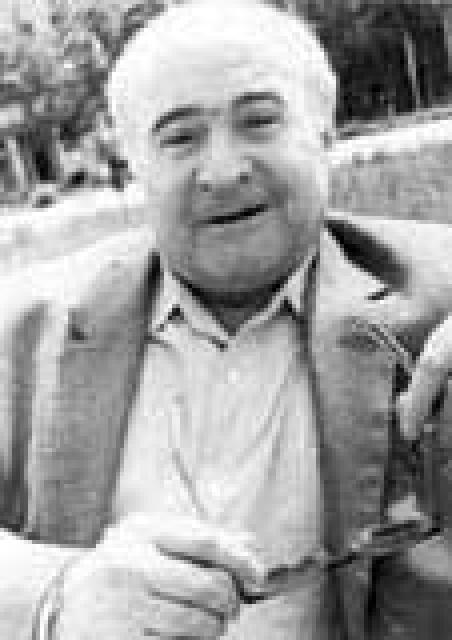
Lev Atamanov
- Early Life and Education
- Beginnings in Film and Wartime Service
- Pioneering Soviet Animation
- International Success
- Leadership and Legacy
- Filmography
- "The Tale of the White Bull" (1933)
- Award at the 11th Cannes International Film Festival (1958)
- Award at the Rome International Film Festival (1958)
Early Life and Education
Born in the Soviet Union, Lev Atamanov embarked on his cinematic journey by completing the esteemed First State Film School in 1926, earning a degree in film directing under the tutelage of renowned filmmaker Lev Kuleshov.
Beginnings in Film and Wartime Service
Atamanov's career in cinema commenced in 1928, where he assisted as a director at the "Gozvoenkomino" film studio. During World War II, Atamanov patriotically served his country, leaving an imprint on his filmmaking.
Pioneering Soviet Animation
Playing a pivotal role in the inception of Soviet animation, Atamanov showcased his talent in Armenia with the films "The Dog and the Cat" (1938) and "The Magic Carpet" (1948). In 1949, he joined the legendary "Soyuzmultfilm" studio, establishing himself as a prominent animator.
International Success
Atamanov's animated masterpieces, including "The Yellow Stork" (1950), "The Scarlet Flower" (1952), "The Golden Antelope" (1954), and "The Snow Queen" (1957), gained both critical acclaim and international recognition. They were honored with awards and accolades at prestigious film festivals across the globe.
Leadership and Legacy
Within the animation community, Atamanov held influential positions. He served as chairman of the "Soyuzmultfilm" puppet animation unit in the early 1960s and as a member of various artistic councils. His contributions extended beyond directing to include leadership and mentorship.
Filmography
Atamanov's prolific filmography boasts a diverse range of animated works:
"The Tale of the White Bull" (1933)
"The Blot in the Arctic" (1934)"The Blot the Barber" (1935)
"The Dog and the Cat" (1938)
"The Priest and the Goat" (1941)
"The Magic Carpet" (1948)
"The Yellow Stork" (1950)
"The Scarlet Flower" (1952)
"The Golden Antelope" (1954)
"The Dog and the Cat" (1955)
"The Snow Queen" (1957)
"The Color Kidnappers" (1959)
"Roads of Spring" (1959)
"The Key" (1961)
"Tales of Strange Colors" (1962)
"Jokes" (1963)
"The Shepherdess and the Chimney Sweep" (1965)
"The Bouquet" (1966)
"The Bench" (1967)
"Kaleidoscope-68. The Cyclist" (1968)
"Kaleidoscope-68. The Fence" (1968)
"The Ballerina on the Ship" (1969)
"It Is in Our Power" (1970)
"Trouble (Compilation)" (1971)
"Petrushka" (1971)
"Heads Up!" (1972)
"Novellas of Space" (1973)
"The Pony Runs in Circles" (1974)
"I Remember..." (1975)
"A Kitten Named Gav" (1976) (Issue 1)
"A Kitten Named Gav" (1977) (Issue 2)
"A Kitten Named Gav" (1979) (Issue 3)
"A Kitten Named Gav" (1980) (Issue 4)
Awards
For "The Golden Antelope":
Award at the 7th Cannes International Film Festival (1955)
Award at the Belgrade International Short Film Festival (1955)
Award at the Durban International Film Festival (1955)
Award at the 1st London International Film Festival (1957)
For "The Snow Queen":
Award at the 9th Venice International Film Festival for Children and Young People (1957)
Award at the 11th Cannes International Film Festival (1958)
Award at the 3rd London International Film Festival for Festival Films (1959)


