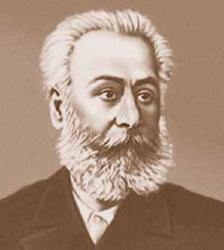
Lev Berinsky
 Israel
Biography of Lev Berinsky
Lev Berinsky is a Russian and Jewish poet and translator who writes in Yiddish and Russian. He was born in the town of Kaushany in Bessarabia (now the Kaushany district of Moldova) in a tailor's family. During the Great Patriotic War, he was evacuated to Tajikistan and later to Zlatoust in the Urals. After returning to Moldova, his family lived in Novye Kaushany for a while before moving to the Tabakeriya district in Kishinev. Berinsky became involved in the literary community here and befriended future film director Valeriu Gaji, as well as future writers Alexander Gelman and Alexander Brodsky. He made his debut with a poem in Russian in the Kishinev newspaper "Young Leninist" in 1952 or 1953. From 1954, he lived in Stalino (now Donetsk), where he worked as an accordionist and music teacher after studying at the Stalino Technical School for Cultural and Educational Workers (1957-1959). He was part of a group of local Russian poets and was close friends with Ukrainian poet Vasyl Stus. He was published in the newspaper "Komsomolets Donbassa". In 1960-61, he lived and worked in Moldova before returning to Donetsk. From 1963 to 1968, he studied German language and literature at the Smolensk Pedagogical Institute, and from 1965 to 1970, he studied poetic translation at the Gorky Literary Institute. In 1970-1974, he taught German language at a vocational school in Moscow. In 1981, he debuted with Yiddish poems in the Moscow journal "Sovietshe Haymland" (Soviet Homeland) and became a regular contributor. From 1981 to 1983, he studied Jewish language and literature at the Higher Literary Courses in Moscow, along with other writers such as Boris Sandler, Moyshe Pens, Velvl Chernin, and Alexander Brodsky. He contributed to the literary section of the Moscow publication "VESK" (Bulletin of Jewish Soviet Culture) and had a regular column in the Kishinev newspaper "Undzer Kol" (Our Voice) under the pseudonym I. Ditev.
Since 1991, Berinsky has been living in Israel, specifically in the city of Akko since 1992. He was one of the founders of the literary journal "Naye Veygn" (New Paths), which was published from 1992 to 2003. He served as the chairman of the Israeli Union of Yiddish Writers and Journalists from 1998 to 2001 and is a member of the PEN Club. He is a recipient of the Sara Gorby Prize (1993), David Hofshteyn Prize (1997), and Itzik Manger Prize (1997) - the highest literary award for Yiddish literature. Lev Berinsky's brother is the renowned Russian composer Sergei Berinsky. He is known for his numerous translations from German, Romanian (Moldovan), Spanish, Hebrew, and other languages into Yiddish and Russian, as well as from Yiddish to Russian and vice versa. He has published separate books of his Russian translations of the poetry and prose of Marc Chagall, Dora Teitelboim, Isaac Bashevis Singer, and Mordkhe Tsanin (from Yiddish), Mircea Dinescu and Shaul Carmel (from Romanian). He has also translated works by H.N. Bialik (the epic poem "The City of Slaughter"), Shlomo Vurzoger, Motl Grubyan, Aron Vergelis, and Chaim Beider (from Yiddish), Antonio Machado, Omar Lara, and Rafael Alberti (from Spanish), Georges Amaudru (from Portuguese), Alfred Jarry (from French), and Marin Sorescu (from Romanian), as well as poetry by Emil Bocu, Andrei Lupan, Pavel Botu, and Paul Mihnea (from Moldovan), Vasyl Stus (from Ukrainian), Eduardas Mezelaitis (from Lithuanian), essays by Rabbi Moses Rosen (from Romanian), and many Romanian poets (Mihai Eminescu, Geo Bogza, Vintila Teodorescu, Nichita Stanescu, Ion Alexandru, and dozens of others). His first collection of Yiddish poems, "Der Zuniker Veltboy" (Sunny Cosmology), was published by Sovetsky Pisatel in Moscow in 1988. Since then, three collections of Yiddish poems have been published in Israel (two of which are bilingual - Yiddish-English and Yiddish-Russian), as well as two collections of Russian poems (one under the pseudonym Mavrogeny Push). In his Yiddish works, Berinsky leans towards modernism, using hexametric verse, intertextual richness, and freely employing scientific terminology and the dialectal speech of Bessarabia.
The first translations of Berinsky's Yiddish poems into Russian were done by Alexei Parshikov (born Raiderman). His Yiddish poems translated into German (the poem "Rendsburg Mikveh" and the collection "Experiments with World Elements") were published in Germany in 1994 and 1999. His Russian poems have been included in anthologies of Russian-language poetry from Israel and Ukraine. His poems have been translated into Hebrew by Yakov Besser and Asher Gal, into Romanian by Grigore Hadzhiu and Mircea Dinescu, into English by Vivien Eden and Dalia Rosenfeld, and into French by Charles Dobzynski and Batya Baum. In addition to his poetic works, Berinsky regularly publishes essays and articles in the newspaper "Forverts" (Forward, New York), the anthology "Naye Veygn" (New Paths, Tel Aviv), and other contemporary Yiddish publications. He often uses exotic pseudonyms in his journalism, such as Mavrogeny Push, I. Ditev, Edith Nakh, and A. Zakharankov. Lev Berinsky's poems have been set to music by Moldovan composer Zlata Tkach and his brother, Sergei Berinsky (songs include "Flying Vapor," "Revelation," and others).