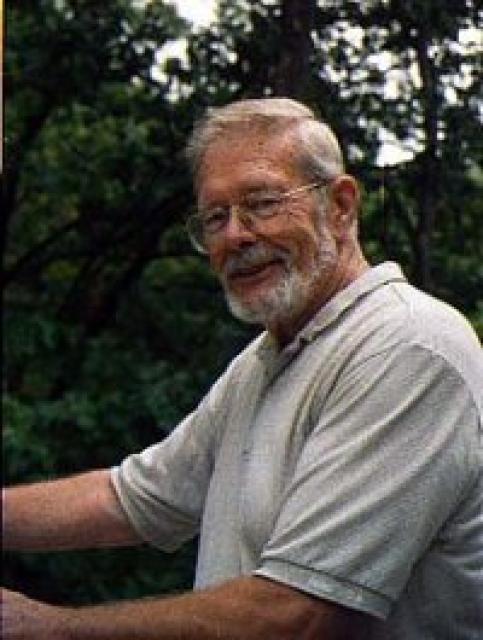
Lewis Binford
 USA
USA- Lewis Binford: Pioneer of New Archaeology
- Education and Career
- New Archaeology
- Debates and Criticisms
- Personal Life and Legacy
Lewis Binford: Pioneer of New Archaeology
Early Life and InfluencesLewis Binford grew up in rural Virginia, where his family engaged in carpentry work. Binford initially pursued the family business before serving as an army translator in Okinawa, Japan. This exposure to foreign cultures ignited his interest in anthropology.
Education and Career
Binford earned a BA from the University of North Carolina and MA and PhD from the University of Michigan. He joined the faculty of the University of New Mexico for 23 years before moving to Southern Methodist University in 1991. In 2000, Leiden University awarded him an honorary doctorate for his contributions to scientific methods in archaeology.
New Archaeology
Binford is primarily known for his role in developing New Archaeology in the 1960s. He and his followers advocated for rigorous scientific methods and a hypothetic-deductive approach in archaeological research. They focused on generalization and the interactions between humans and their environment, viewing culture as an extrasomatic adaptation strategy. Binford's ideas were influenced by his doctoral advisor, Leslie White, and were a reaction to the prevailing culture-historical approach.
Debates and Criticisms
Binford engaged in numerous debates, arguing with James Sackett on the nature of style and Ian Hodder on symbolism and methodology. He also challenged post-processual, behavioral, symbolic, and postmodernist anthropology. His friendly dispute with French anthropologist François Bord on Mousterian artifacts led to significant theoretical publications. While New Archaeology was initially seen as a revolution, it is now viewed as a gradual shift in priorities, with renewed attention to Walter Taylor's "A Study of Archeology."
Personal Life and Legacy
Binford was married to Sally Binford, a prominent anthropologist who contributed to his professional success. Sally played a crucial role in editing and writing several of his books, including "New Perspectives In Archaeology." She was also an advocate for sexual liberation and identified as bisexual. Shortly before her 70th birthday, Sally Binford committed suicide.
Lewis Binford is considered one of the most influential archaeologists of the 20th century. His contributions to scientific methods, the study of human adaptation, and archaeological theory continue to shape the discipline.



