
Lilian Vernon
 USA
USABiography of Lillian Vernon
Lillian Vernon, the founder and owner of the Lillian Vernon Corporation, is a giant in the world of female entrepreneurship. She has a unique intuitive sense of what people want to buy from a wide range of products, which she calls her "golden inner voice". Instead of relying on traditional marketing research methods or targeted focus groups, Vernon trusts her "golden inner voice" when developing new product projects. She has a unique ability to sense what the "average woman" in the store is interested in, being an "average woman" herself. Despite her convincing success, Vernon's strategy has been working flawlessly for many years. She claims that the power of her intuition allows her to make important breakthroughs that set her apart from the rest. While sharp intuitive vision is present in all great entrepreneurial and creative individuals, most of them are unaware of their unique ability. Vernon has long recognized this important personal trait and used it to make the Lillian Vernon Corporation a leader in the highly competitive industry. Vernon is a powerful independent woman who used a new form of promotion for her products, which could terrorize traditional managers. One example of her unconventional approach to sales stimulation is a 100% money-back guarantee within ten years for any item purchased from her catalog that does not satisfy the customer. It is worth noting that Vernon's catalog products are personalized with the owner's initials or engraved name, thus excluding the possibility of reselling the item. The initial experiments found widespread support for this sales stimulation method, which was noted in the Fortune 500 list. This could have been a serious threat to the status quo. Vernon's uniqueness and often sacrilegious approach to marketing show how confidently she regarded her products and her own decisions. Rumors of her connections and reliability apparently quickly reached the mainstream customers. She prioritized customer satisfaction and service quality as her "number one" priority, which apparently explains why the Lillian Vernon Corporation has achieved such tremendous success. Vernon's business philosophy can be summarized in her aphorism: "I never sell anything I wouldn't want to have in my own home." Another one of her sayings is: "Make the most of every opportunity." The Lillian Vernon Corporation gained fame in 1987, becoming the largest business founded by a woman and being listed on the American Stock Exchange. In 1993, the company sold $173 million worth of mail-order gifts, becoming a leading company in the catalog gift retailing industry. Vernon herself is an inspirational speaker in many business schools, with six of these institutions awarding her an honorary doctorate. She serves as a director for numerous non-profit organizations such as New York University, Briarcliffe College, and the Children's Museum of Art, among others. This successful entrepreneur is now a wealthy woman, having achieved financial independence through many years of hard work aimed at achieving excellence and superiority in whatever she tried her hand at. Like almost all successful entrepreneurs, Vernon never pursued this solely for the sake of money. She started her own company to increase the family income, and since then it has become her beloved work. However, Vernon never considered it work because it was her passion and her life. But when people work hard and passionately, striving to be the best, they almost certainly become winners. Now Vernon is financially independent. Her membership in the "Committee of 200" (a group of the most influential female entrepreneurs in the country) and the Women's Forum confirm her status as one of America's outstanding leaders. These groups were founded as examples of leadership for young women seeking to break through the infamous glass ceiling as entrepreneurial pioneers or professionals.
Personal Life History
Lillian Menashe was born on March 18, 1928, in Leipzig, Germany. She was the first daughter of a middle-class industrialist. Her older brother, Fred, died when she was a teenager. The family fled anti-Semitic Germany to the Netherlands when she was only five years old. They were then forced to flee from the Netherlands to the United States in 1937 when Lillian was just ten. These abrupt moves to foreign environments gave her a unique ability to cope with the unknown and created a resilient self-confidence. She had to learn new cultures, foreign languages, and make new friends again. Her father, Herman Menashe, was a loving father and became the first role model in her life. His perseverance and tenacity left an indelible mark on young Lillian's soul. It impressed her that he had the strength to adapt to the terrible injustice that he could not correct and still act in the most positive way. The harsh reality that forced him to sell a profitable business in Germany due to his ethnicity could never break her father. Then he started almost from scratch, first in the Netherlands and then in the United States. Vernon recalls that his perseverance became her first and most important role model, which was invaluable in shaping her as an entrepreneur: "I think it was my father who was the first and most important role model for me, I will never forget his ability to adapt to reality. This is a quality that fascinates me in people today - the ability to invest the last ten cents in a business, but squeeze everything out of it." Vernon describes her father's persistence as one of the guiding principles in her own rise to the top. She recalls, "I am so admiring of the fact that if he couldn't sell a particular zipper, he would immediately find something else from wholesalers and put money into it." Young Lillian attended three different schools and learned German, Dutch, and English languages until the eighth grade. She attended school in Germany, moved to the Netherlands, but most of her education was in New York. Lillian was an avid reader, and this was supported by all members of her family. She was given the freedom to make mistakes and try, which proved to be very useful in her later success. In her teenage years, Vernon idolized the playful and teasing film heroines portrayed by Golden Age Hollywood actresses of the 1930s and 1940s. Later, while studying in college, Vernon fell in love with a well-known New York entrepreneur. At that time, Estee Lauder was developing her main direction of target trading, and Vernon chose her as a role model, striving to learn Lauder's actions in various situations. Lauder was a charming New York entrepreneur in the cosmetics business who was just starting out and ran her own company with an "iron fist". Vernon did the same. Like Lauder, Vernon spent her teenage years fantasizing about being beautiful and famous, as she deeply felt her immigrant status and was captivated by the queens of Hollywood movies. She desperately wanted to be a "real American." Vernon inherited her father's European work ethic and started working as a teenager. She had various jobs, starting at the age of fourteen as a ticket collector in a movie theater, earning a mere ten cents an hour. She then worked as a salesgirl in the candy department at Baton's store, which she says gave her extremely valuable experience that would benefit her later in life as an entrepreneur: "These jobs taught me how to work with the public, how to interact with all sorts of people, and not be afraid when some unusual personalities approached me. Among other things, it helped me overcome my inherent shyness. I had to overcome it." Vernon graduated from Julia Richmond High School in 1946. She enrolled in New York University, specializing in psychology but dropped out after her first year when she married Sam Hochberg and settled down with her husband in the suburb of Mount Vernon. It was at the kitchen table in Mount Vernon that Vernon's future became part of history.

Professional Career
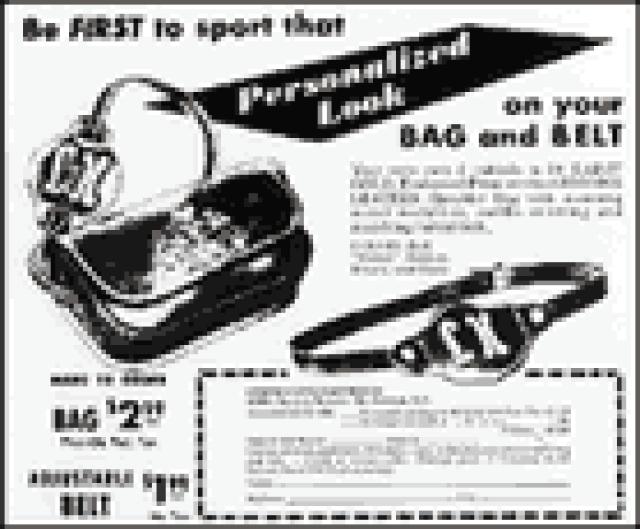
When Vernon started her mail-order business from her kitchen table in 1951, she was a twenty-three-year-old pregnant housewife trying to earn some extra money for her growing family. She used $2,000 received as wedding gifts to make an initial stock of wallets and belts and placed a $495 advertisement in Seventeen magazine. Vernon acted in the classic Promethean spirit and prepared to conquer new uncharted territories that no one else had dared to tread. Can you imagine Sears offering personalized belts with a full money-back guarantee? Of course not, because Sears was the largest general catalog merchant and Vernon's main competitor. Or imagine any other well-known company offering a new product in a new market without any hint of confidence in its success. Only the spirit of entrepreneurship could act so boldly in a foreign environment. Neither Sears, nor Montgomery Ward, nor Spiegel would ever even consider such a daring venture. Vernon was brave enough (or perhaps overly naive) to do what no one else was willing to do. But she intuitively knew that women like herself would buy her products, and she "felt it in her gut" that this knowledge could be fully trusted when charting her own course in business. Her strategy was developed based on a keen understanding of what was happening, so she easily ignored what the rest of the world thought about it. Vernon's genius lay in offering customers unique products that they desired. Her strategy was based on doing what established competitors were afraid to do: offering personalized various products that were not available in general merchandise stores. Vernon preferred to take the risks that "grown-up boys" were afraid of, and this became her strength. She discovered a marketing niche, even if she had never heard of the concept. "Go where others fear to tread" is the motto that unites most great entrepreneurs, and Vernon followed it relentlessly. She used her advantage where she saw weaknesses in catalog giants (their inability to offer customers small items that were not occupying their niche) and directed all her efforts there. Her main strategy became a defensive barrier against the invasion of companies that could have destroyed her in the years when she was just forming her business. Vernon's foresight brought her unimaginable success almost instantly.

The first two types of products Vernon offered were belts and wallets, including free personalization. The first mail-order advertisement brought in $32,000 worth of orders within the first twelve weeks of operation. Vernon was ecstatic about her unexpected success and proceeded to advertise personalized bookmarks to test if the first success was just a fluke. The new products sold twice as much as the first time, and Vernon realized that she had many more opportunities ahead of her than just one forced venture. She achieved success not only financially but also gained more confidence with each new product. Her success grew unstoppably from one new offering to another in distributing products that she herself brought to market. In the next sales cycle, Vernon included tote bags and brass door knockers, and then everything imaginable that was "unique and possible" and could be personalized. Vernon specialized in high-cost items for "women like herself." She admits that her perennial favorites were pencils, but they never had the success of her extremely fortunate domino game. One result of Vernon's rich creative imagination was shamrock-patterned stockings for women who wanted to celebrate St. Patrick's Day in style. The ability to intuitively sense the deeper meaning of a product has always been her ally, and riding it firmly, she entered the field of the mail-order industry crowded with numerous competitors. She was already preparing to compete with the leading large companies when in 1954 she published her first black-and-white catalog with sixteen pages. She sent this edition by mail to 125,000 addresses of actual and potential customers. This strategy increased her annual income to $150,000 by 1955 when the company was still known as "Vernon's Novelties" (the name taken from her New York suburb). Vernon worked tirelessly, still a one-woman show: she was the copywriter, the ad creator, the head buyer, the mail liaison manager all day, and finally the chief financial officer late at night. Like all other great entrepreneurs, Lillian Vernon "knew what had to happen" in the corporation and what was already happening. By 1965, the business had developed enough to warrant the creation of a corporation, and she formed the "Lillian Vernon Corporation." By 1970, the company was earning an annual income of around one million dollars. This unprecedented growth was due to Lillian's work style, which she describes in the following maxims of her business philosophy:
1. Always be attentive to others.
2. Don't be afraid to get dirty.
3. Work on time to have leisure time.
4. Use common sense in all decisions.
5. Plan intuitively but work with your head.
One of Vernon's sore spots is committees. By her description, a committee is a group of people who take "minutes" and steal "hours." She also remains unwavering in her desire to put herself in the customer's shoes, which led to the company's motto: "Let your customer be your guide." Vernon still worships her relic, the "golden inner voice," giving it the right to make most of her major decisions, and according to her, it is usually about 90 percent correct decisions.


