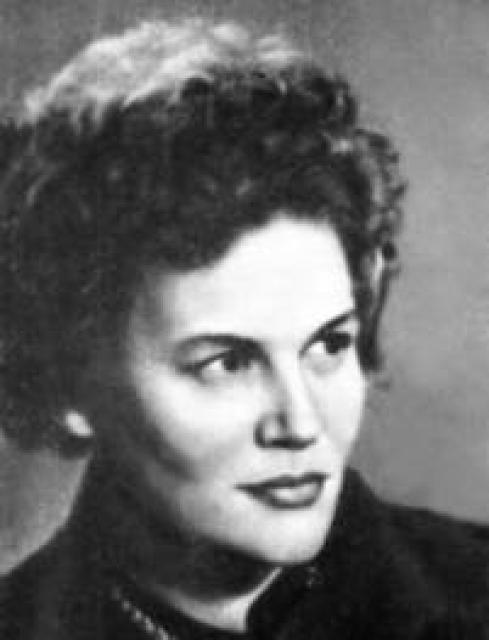
Lina Kostenko
 Ukraine
- Biography of Lina Kostenko
- Creative Development and Contributions
- Other Accomplishments and Recognition
- She rarely appears in public and leads a reclusive lifestyle.
Biography of Lina Kostenko
Early Life and EducationLina Kostenko is a Ukrainian writer, poetess, and laureate of the Shevchenko Prize (1987). She was born into a family of teachers and in 1936, her family moved from Rzhyshchiv to Kyiv, where Lina completed high school. She studied at the Kyiv Pedagogical Institute and the Moscow Literature Institute named after A.M. Gorky, graduating in 1956. Lina Kostenko was one of the first and most remarkable young Ukrainian poets to emerge in the late 1950s and early 1960s. This period, known as the "Sixtiers" in Ukrainian literary history, created new styles in Ukrainian literature and encouraged the creation of something new, atypical, avant-garde, but also relentlessly critical of the authorities and the regime of that time. Her poetry collections "The Rays of the Earth" (1957) and "Sails" (1958) sparked the interest of readers and critics, while her book "Journeys of the Heart," published in 1961, not only solidified her success but also showcased her true creative maturity as a poetess, placing her among the outstanding masters of Ukrainian poetry. These bold steps in literary creation became a green light for the Soviet authorities' "Cerberus." The Ukrainian wordsmith felt and surely knew that it wouldn't be long before she could write and publish freely.
Creative Development and Contributions
Lina Kostenko's creative development as a poetess of acute thought and passionate temperament was not without its challenges. The limitation of artistic freedom, various obstacles during the stagnant times, resulted in her poems being almost absent from publication for a considerable period. Nevertheless, during those years, Kostenko diligently worked on her outstanding work, the novel in verse "Marusya Churai," for which she was awarded the State Prize of the Ukrainian SSR named after T.H. Shevchenko in 1987. Her books, such as "Over the Banks of the Eternal River" (1977), "Marusya Churai" (1979), and "Uniqueness" (1980), became extraordinary phenomena in contemporary Ukrainian poetry, significantly influencing her further development. No one has dared to speak about the stereotypical opinions and traditions regarding women and their eternal pains as deeply and profoundly as she did. "My love reached the sky, while Grisha walked on the ground" - deception, the cruelty of everyday life - all of this resounded in "Marusya Churai." Lina Kostenko is a great connoisseur of the female nature, an unwavering warrior for the honor of women, a knight in shining armor, beneath which hides a sensitive, tender, and beautiful woman. Sometimes, she is referred to as a feminist of the mid-20th century.
Other Accomplishments and Recognition
In addition to her poetry, Kostenko has also written the poetry collection "Garden of Melting Sculptures" (1987) and a collection of poems for children titled "The Elderberry King" (1987). She co-wrote the screenplay "Check Your Watches" (1963) with A. Dobrovolsky. She became an honorary professor at the National University of Kyiv-Mohyla Academy.
Lina Kostenko has received numerous accolades, including the title of honorary professor at the National University of Kyiv-Mohyla Academy, honorary doctorate from Chernivtsi National University (2002), the Taras Shevchenko National Prize of Ukraine (1987, for the novel "Marusya Churai" and the collection "Uniqueness"), the Petrarch Prize (Italy, 1994), and the O. Teliga International Literary and Artistic Award (2000). She has also been awarded the Order of Merit from the President of Ukraine (1992) and the Yaroslav the Wise Order V degree in March 2000. Lina Kostenko is our contemporary; as an artist, she is "inscribed" in her time. Her work has become an extraordinary phenomenon in contemporary Ukrainian poetry, significantly influencing its further development. By incorporating national ideals and the best features of the living folk language, as well as her ideological weight and figurative perfection, she elevates Ukrainian literature to the level of the finest examples of European artistic creation. The national problems that Lina Kostenko captures with the highest degree of generalization in her poetry penetrate the consciousness of the reader, evoking active empathy.


