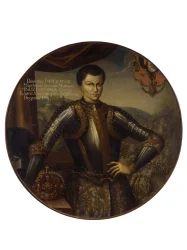
Llywelyn ap Gruffudd
Llywelyn ap Gruffudd, often remembered as Llywelyn the Last, was the most powerful Welsh ruler of the thirteenth century. Through military campaigns, political alliances, and careful statecraft, he brought much of Wales under his authority and secured English recognition of his title as Prince of Wales. His achievement was short-lived: conflict with Edward I ended in defeat, and Llywelyn was killed during the final Welsh war of 1282. His story remains central to the history of Welsh sovereignty.
Early Life and Rise to Power
Llywelyn was the second son of Gruffudd ap Llywelyn and Senana, and a grandson of Llywelyn ap Iorwerth, known as Llywelyn the Great. His exact birth date is not known. After his uncle Dafydd ap Llywelyn died in 1246, the English Crown imposed a settlement that sharply reduced Gwynedd, the family’s traditional power base. Under the Treaty of Woodstock in 1247, Llywelyn and his elder brother Owain shared the remaining lands west of the River Conwy, while the English king retained territory to the east.
Llywelyn spent the next several years building his position. In 1255, at the Battle of Bryn Derwin, he defeated Owain and their younger brother Dafydd, who had challenged his control of the inheritance. He imprisoned both and emerged as the dominant ruler of Gwynedd. In the years that followed, he recovered territory and widened his influence across Wales, taking advantage of divisions among English marcher lords and weakness in the royal government.
Prince of Wales
By the late 1250s, Llywelyn had extended his authority from north Wales into the middle marches and parts of the south. Other native Welsh rulers increasingly recognized his leadership, and he adopted the title Prince of Wales. In 1267, the Treaty of Montgomery brought a major diplomatic victory: Henry III formally recognized Llywelyn as Prince of Wales and accepted the homage of other Welsh princes to him, in return for Llywelyn’s own allegiance to the English king.
The agreement offered a rare framework for Welsh political unity under a native ruler. It also carried financial and political obligations, and it did not settle the underlying contest over authority. Llywelyn strengthened his administration and military position, building Dolforwyn Castle and founding the borough of Abermule. Yet his policies at home and abroad could be forceful, and he faced dissent among Welsh subjects as well as recurring tension with neighboring lords.
Conflict with Edward I
When Edward I succeeded Henry III, relations deteriorated. Llywelyn resisted demands to perform homage, arguing that conditions along the border and threats to his safety made it dangerous. His brother Dafydd and the Powys ruler Gruffydd ap Gwenwynwyn, both former allies, defected to the English side. A failed plot against Llywelyn in 1274 deepened the rupture.
In 1277 Edward invaded Gwynedd. Llywelyn was defeated and compelled to accept the Treaty of Aberconwy, which stripped him of most of his territories and left him ruling a reduced Gwynedd west of the Conwy. He retained the title Prince of Wales, but much of its authority had been lost. A promised marriage to Eleanor de Montfort, daughter of the English baron Simon de Montfort, was finally celebrated at Worcester in 1278 after Eleanor had been detained in England.
The final years of Llywelyn’s rule were marked by disputes over land, law, and the terms of the settlement. The conflict that broke into open war in 1282 began when Dafydd attacked Hawarden Castle. Llywelyn joined the revolt, which initially won support and some military successes. English forces gradually gained the advantage, however, and Eleanor died after giving birth to the couple’s daughter, Gwenllian.
Death and Legacy
As the war continued, Llywelyn moved south with a force to open another front. On December 11, 1282, he was killed near Builth in mid-Wales, on the banks of the Irfon River. Historical accounts indicate that the man who struck him did not initially know the identity of the fallen prince. Llywelyn’s head was sent to London for public display; his body was buried by Cistercian monks, traditionally associated with the abbey at Cwm Hir.
His daughter Gwenllian, his only legitimate child, was sent to a convent as a young girl and lived there until her death. After Llywelyn’s death, Welsh political independence was rapidly extinguished under Edward I’s conquest. The name Llywelyn the Last captures that ending, but his career was also a remarkable attempt to unite Welsh territories under a native government. His recognition as Prince of Wales in 1267 remains one of the most significant diplomatic achievements of medieval Welsh history.