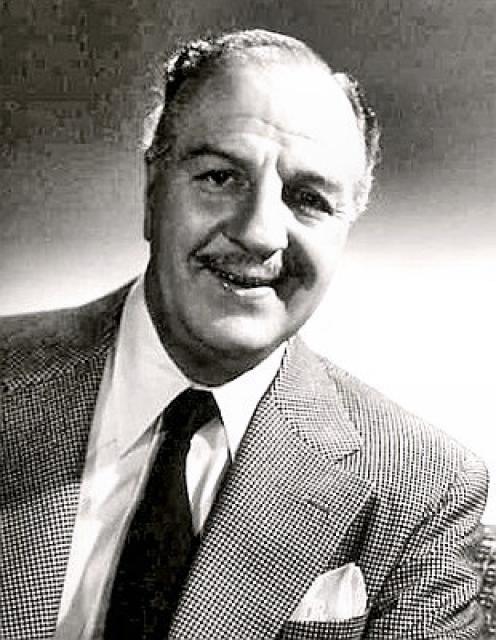
Louis Calhern
 USA
USA- Louis Calhern: A Theatrical and Cinematic Giant
- Military Service and Post-War Success
- Cinematic Breakthrough and Versatility
- Theatrical and Cinematic Balance
- Career Peak and Critical Acclaim
- Personal Life and Final Years
Louis Calhern: A Theatrical and Cinematic Giant
Early Life and Career AspirationLouis Calhern, born as Carl Henry Vogt in Brooklyn, New York, in 1895, spent his childhood in St. Louis, Missouri. His athleticism and charismatic nature were evident early on, particularly in his involvement with football. It was during a football game that his potential as an actor was discovered by a director of a touring theater company. This experience ignited Calhern's passion for performing, and he embarked on his acting journey shortly before World War I by moving to New York City.
Military Service and Post-War Success
Calhern's plans were disrupted by the war, as he served in France during World War I. Upon his return to the stage, he quickly gained recognition for his captivating performances. His breakout role came in the Broadway production of "Cobra," establishing him as a rising star.
Cinematic Breakthrough and Versatility
Calhern began appearing in films in the early 1920s, but his true breakthrough came in the 1930s. He played a wide range of characters in films such as the drama "The Woman Accused" (1933), the musical comedy "Duck Soup" (1933), and the adventure epic "The Count of Monte Cristo" (1934). His versatile acting abilities and memorable presence made him a highly sought-after performer.
Theatrical and Cinematic Balance
In the 1930s and 1940s, Calhern balanced his work in film and theater. He appeared in Broadway productions such as "King Lear" (1950) and "The Wooden Dish" (1955). However, his film career flourished in the 1950s after he signed a lucrative contract with MGM.
Career Peak and Critical Acclaim
During this period, Calhern delivered unforgettable performances in films such as "Annie Get Your Gun" (1950), John Huston's "The Asphalt Jungle" (1950) with Marilyn Monroe, and Joseph L. Mankiewicz's "Julius Caesar" (1953), for which he received an Oscar nomination. His popularity reached its peak in the mid-20th century, thanks to his striking presence, sophisticated manner, and impeccable delivery.
Personal Life and Final Years
Calhern was married four times, each to actresses: Ilka Chase (1926-1927), Julia Hoyt (1927-1932), Natalie Schafer (1933-1942), and Marianne Stewart (1946-1955). All four marriages ended in divorce.
The actor suffered a sudden heart attack while filming "The Teahouse of the August Moon" in Tokyo in 1956. He was replaced in the role by Paul Ford, who had played it in the original stage production. By a strange coincidence, Calhern had replaced Frank Morgan in the film adaptation of "Annie Get Your Gun," who had also died of a sudden heart attack. Louis Calhern was laid to rest at the Hollywood Forever Cemetery.


